How Google Tells a Link Farm From a Popular Site: The Link Spam Detection Patent
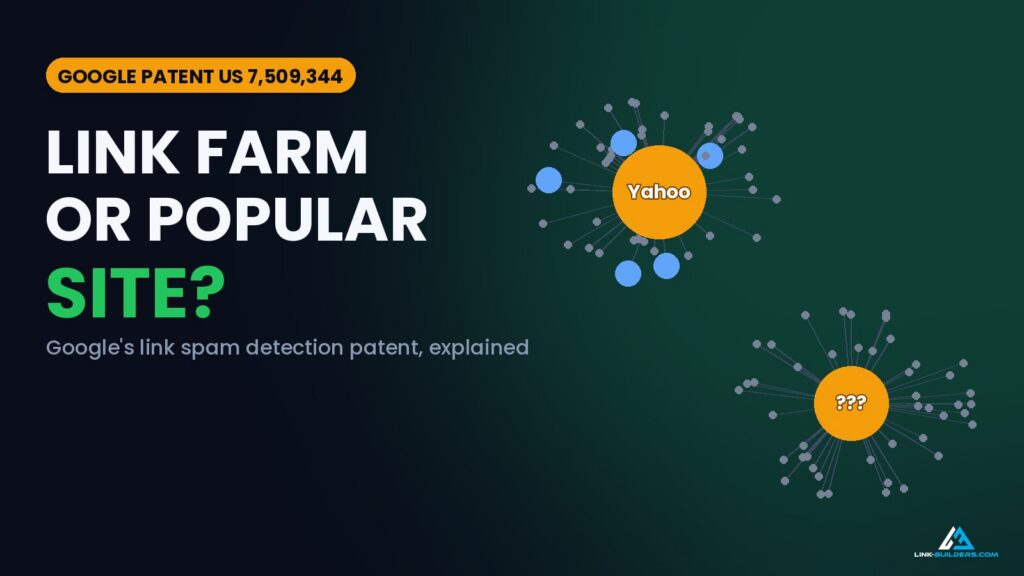
Here are two web pages. Both have a huge number of links pointing at them. One is Yahoo, one of the biggest sites on the internet. The other is a link farm, a pile of junk pages built to fake importance.
From the outside, they look almost the same. So how does a computer tell them apart, without a human ever looking?
That question comes straight from a Google patent. So far in this series, I’ve covered where a link sits, where it comes from, when it arrives, and who is behind it. This article is about the shape of your whole link profile. The answer involves a dial Google can turn, and watching which pages wobble when it does. You can watch the full video breakdown below.
The Patent at a Glance
The link spam detection patent is US 7,509,344, titled “Method for detecting link spam in hyperlinked databases.”
| Detail | Value |
|---|---|
| Patent number | US 7,509,344 |
| First filed | August 18, 2003 (provisional) |
| Filed | August 18, 2004 |
| Granted | March 24, 2009 |
| Inventors | Sepandar D. Kamvar, Taher H. Haveliwala, Glen M. Jeh |
| Assignee | |
| Later versions | Continuations granted in 2011 and 2012 |
| Status | Expired in 2026, according to Google Patents |
Google kept this idea protected across three versions of the patent. That alone suggests it was more than a passing experiment.
Two Kinds of Link Spam
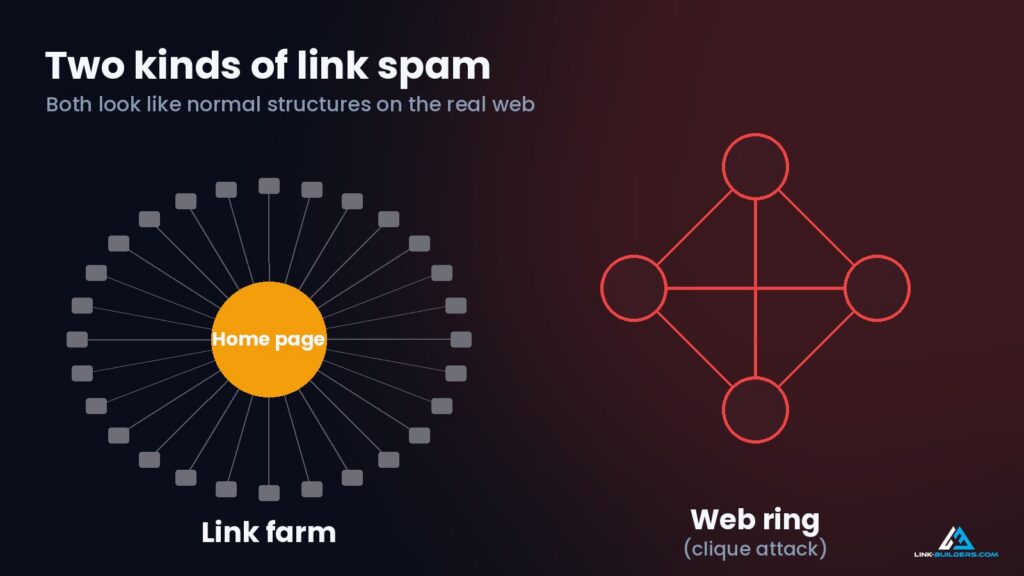
The patent names two kinds of link spam.
Link farms
A link farm is a large set of dummy pages that all link to one page, to make it look important. The patent’s example is the home page of a commercial website, propped up by many pages that exist only to point at it.
Web rings, or clique attacks
The second kind is the web ring, which the patent also calls a clique attack. It is a group of pages that link mostly to each other, so that all of them look like authorities.
Why a simple rule fails
Here is the problem. The real web is full of structures that look just like these. A simple rule, like flagging every page with lots of links pointing at it, would catch Yahoo right along with the spammers. The patent makes that exact point. And checking the whole web by hand is impossible.
The One Real Difference
The patent puts its finger on what separates a popular page from a link farm. A truly popular page gets links from a mix: lots of small pages, but also some important, high-ranking ones.
In a link farm, the pages pointing at the target all tend to be weak. Every single one.
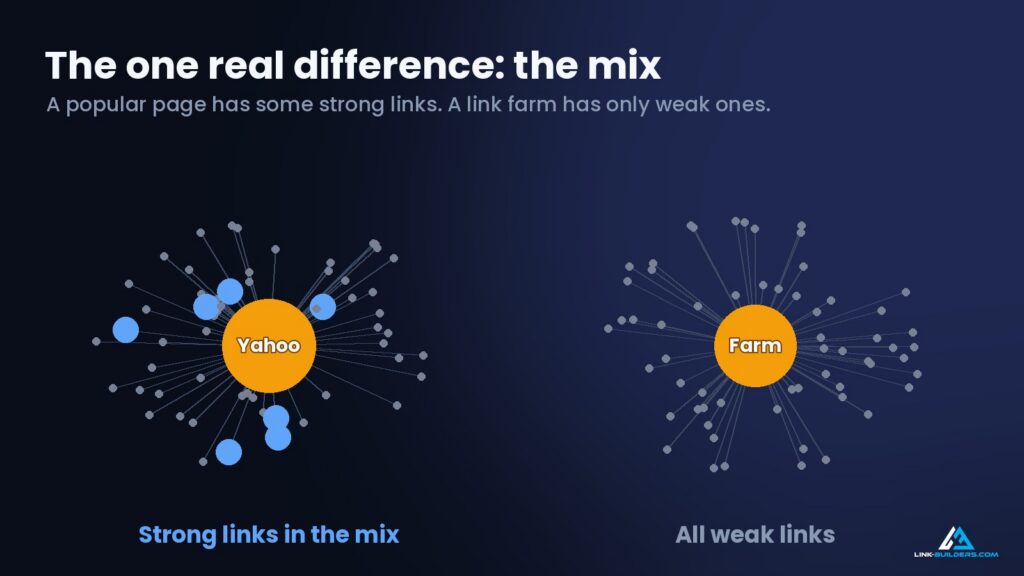
So the difference is not how many links a page has. It is the mix of strength behind them. But Google still needs a way to measure that mix across billions of pages, quickly. That is where the dial comes in.
The Dial: PageRank’s Coupling Factor
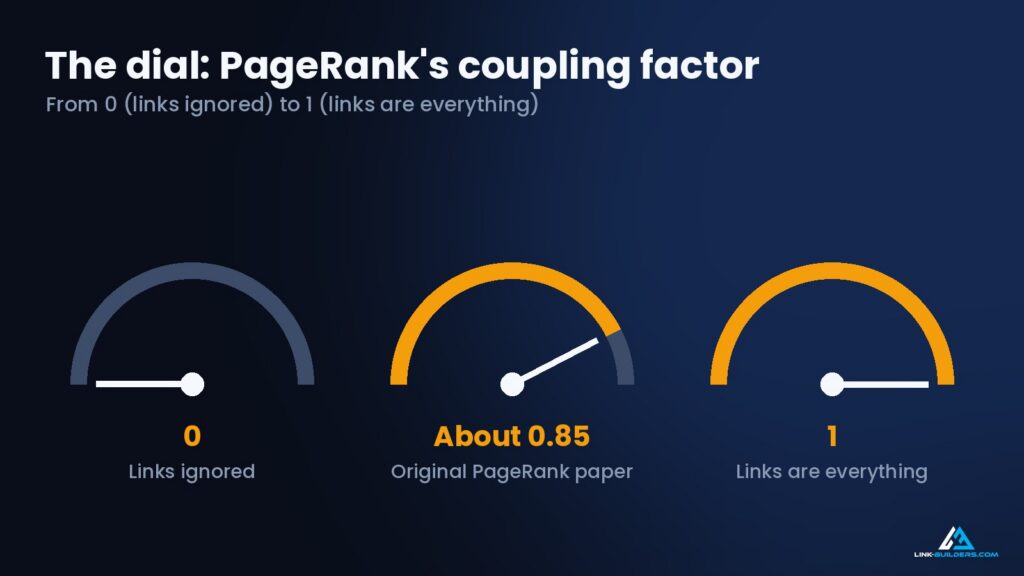
PageRank has a setting built into it. This patent calls it the coupling factor. Think of it as a dial that runs from zero to one.
- At zero, links don’t matter at all. It is like someone jumping from page to page completely at random, so every page on the web ends up with the same rank.
- At one, rank flows entirely through links.
Normal ranking sits somewhere in between. Google’s original PageRank paper set this dial at about 0.85, a number many SEOs will recognize. That figure comes from the paper, not from this patent, but it describes the same dial.
The Wobble Test
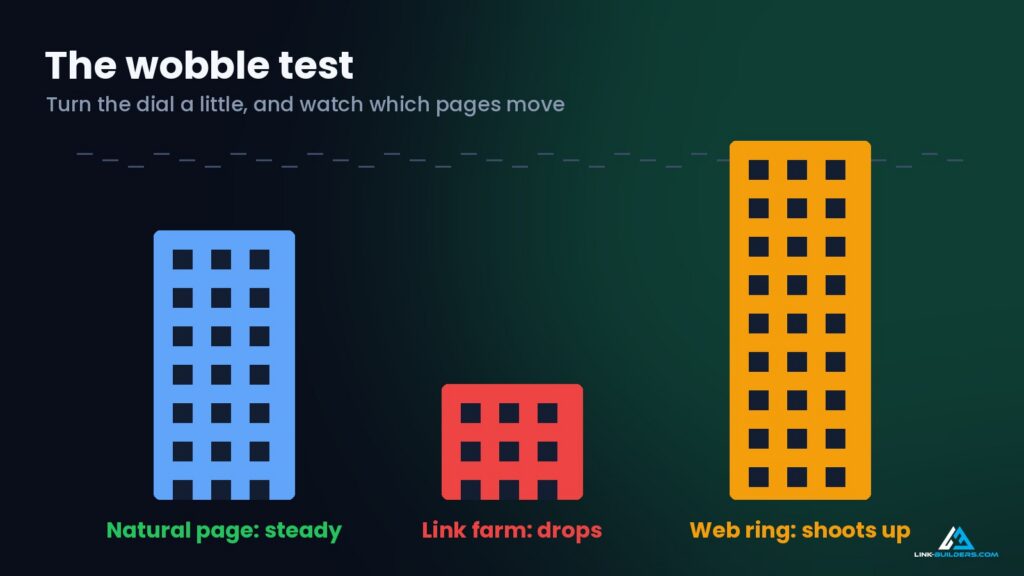
Here is the clever part. Google can turn that dial just a little and measure how much each page’s rank changes. The patent calls that change the derivative. I think of it as a wobble test.
Natural pages barely move
For a naturally popular page, the rank barely changes. Its strong links and its weak links pull in opposite directions, and they cancel each other out.
Link farm targets drop sharply
For a link farm target, the rank drops sharply. Every link feeding it is weak, so nothing holds it up. The patent notes that because there tend to be many of these weak pages, the drop tends to be steep.
Web rings shoot up
For a web ring, the rank shoots up. The rank keeps circling inside the ring and never leaks out to other sites. Real groups of sites link out to the rest of the web, so their rank spreads out instead.
The spam likelihood score
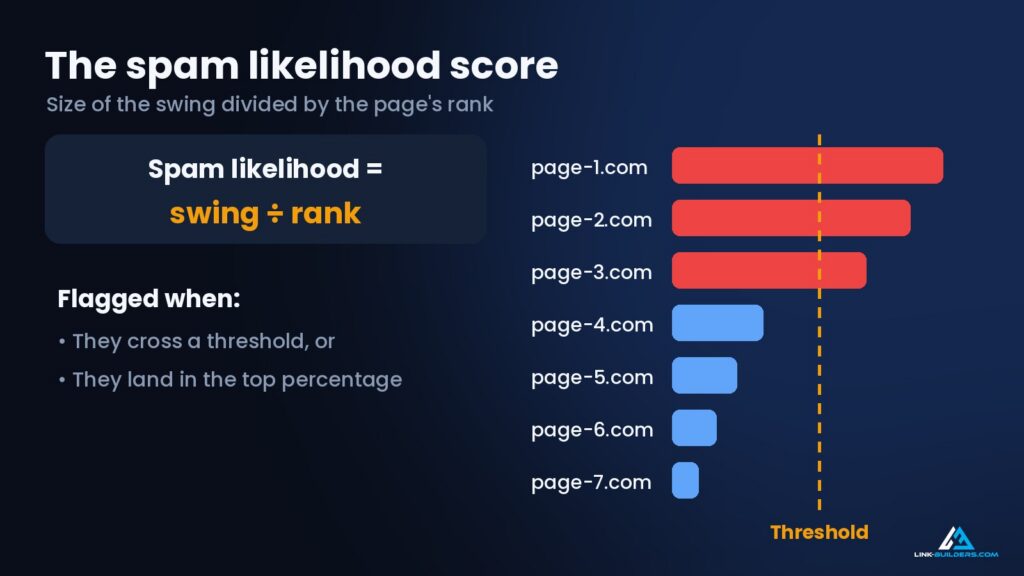
The patent then turns this into a score. Take the size of the swing and divide it by the page’s rank. That gives what the patent calls a spam likelihood value:
\text{Spam likelihood} = \frac{|\text{change in rank}|}{\text{rank}}Pages that swing hard for their size get flagged, either because they cross a threshold or because they land in the top percentage of scores.
What Happens to Flagged Pages
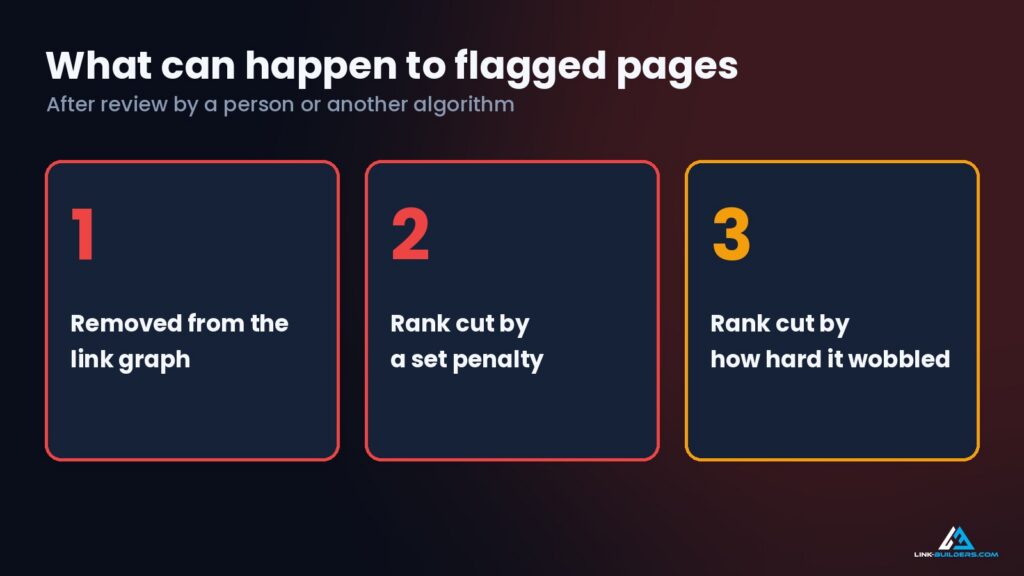
The patent says a human, or another algorithm, can review the flagged pages and make the final call. It then names the countermeasures:
- The page can be removed from the link graph completely.
- Its rank can be cut by a set penalty.
- Its rank can be cut by an amount that matches how hard it wobbled.
The third option is the one link builders should notice. It means the penalty can scale with how unnatural a profile looks.
Structure beats count
This test doesn’t count your links. It looks at the structure around them, and structure is much harder to fake than a number. The patent even says the same method works on any kind of linked data, such as patents citing patents, academic journals and social networks. It is a general way to spot fake importance wherever it shows up.
What This Means for Your Link Building
Here is what the patent suggests for anyone building links.
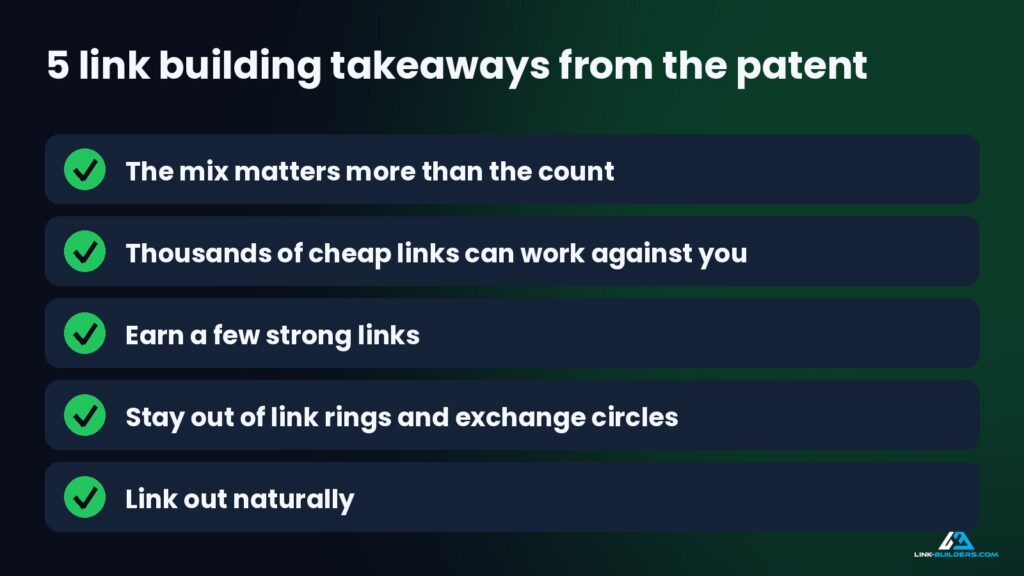
1. The mix matters more than the count
A profile built only from weak links has the same shape as a link farm, no matter how many links it has.
2. Thousands of cheap links can work against you
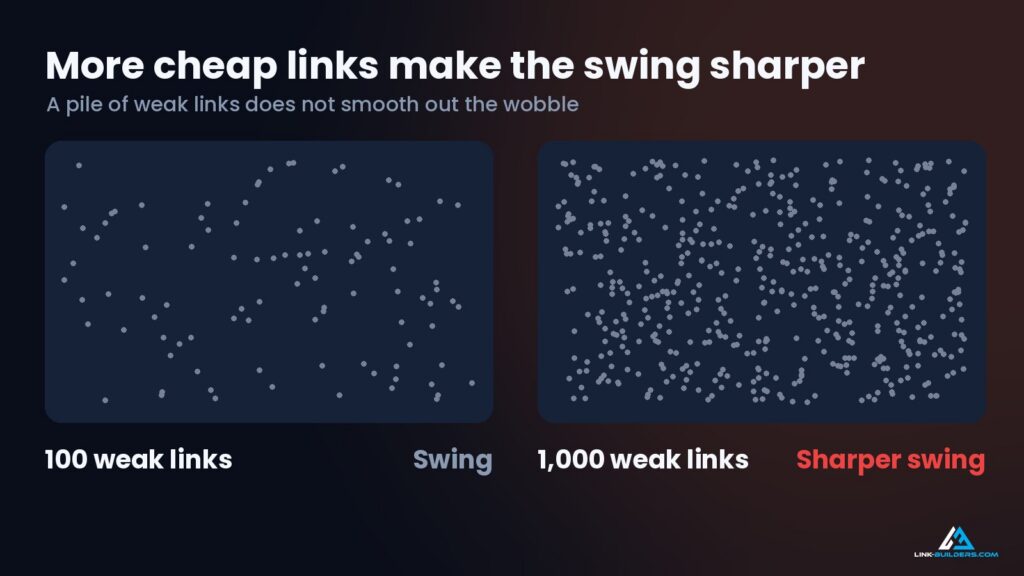
More weak links don’t smooth out the swing. They make it sharper. For a closer look at cheap versus premium links, see the $500 vs. $100 backlink showdown.
3. Earn a few strong links
A handful of genuinely important links can change the whole shape of your profile. They are the difference between a page that wobbles and one that holds steady.
For example, one of the factors used to determine quality is understanding if other prominent websites link or refer to the content. This is generally a good sign that the information is trustworthy.
— Google Search · How Search Works · Google Search: How Does Google Determine Ranking Results
4. Stay out of link rings and exchange circles
Rank that never leaks out is exactly what this test looks for. Google’s spam policies also list excessive link exchanges as link spam.
5. Link out naturally
Real sites link to other real sites, and that outward flow is part of what makes a structure look natural. It is also part of building a natural backlink profile.
The Honest Caveat
A patent shows what Google invented and chose to protect. It does not prove this exact system runs in Google’s algorithm today. Google Patents lists this one as expired in 2026.
Still, Google kept this idea going for years, across three versions of the patent. And the core insight holds up on its own: a manufactured link profile has a different shape than an earned one.
Conclusion
The link spam detection patent comes down to one idea: it’s not how many links you have, it’s the shape they make together. Google described a way to nudge PageRank and watch which pages wobble. Natural pages hold steady, link farm targets drop, and web rings shoot up.
Build a mix of strong and weak links from real sites that link out to the rest of the web, and your profile won’t wobble.
Next in this series, I look at how Google can use anchor text to rank pages, what anchor text ratios SEOs aim for, and the trick I use before every campaign.
Want a link profile with the right shape? Talk to Link Builders about your next campaign.
Sources
- US 7,509,344: Method for detecting link spam in hyperlinked databases, Google Patents
- The Anatomy of a Large-Scale Hypertextual Web Search Engine, Sergey Brin and Lawrence Page, Stanford University
- Spam policies for Google web search, Google Search Central
Want more breakdowns like this? Follow White Label Backlinks on YouTube for new videos on Google patents and link building.
About the author

Justin Davis has been building backlinks since 2015 and has built links for more than 150 clients across law, healthcare, real estate, software, and other industries. He built the first version after years of doing the research by hand, and now builds the same workflow for in-house teams. More on who Justin Davis is, on YouTube, on LinkedIn, or on X.