How to Get Your Dental Practice Recommended by ChatGPT (and Google AI)
By Justin Davis · November 2, 2026
A cracked tooth on a Saturday. A move to a new city. A family that needs a dentist who takes their insurance. More patients in those moments now open ChatGPT and type a plain question, such as “Who’s the best dentist near me?”
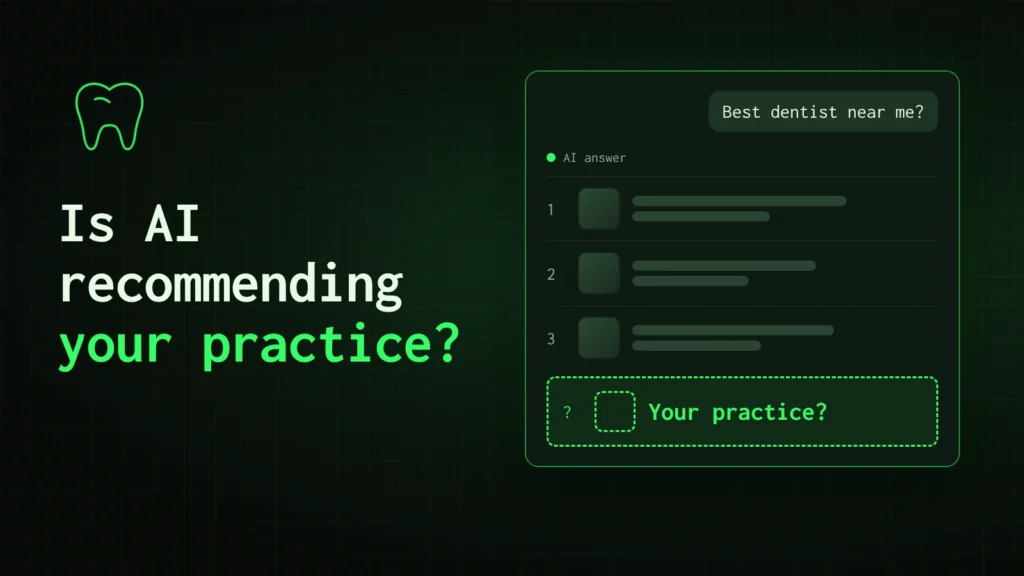
On October 31, 2026, we asked ChatGPT, “Who’s the best dentist in Houston?” It didn’t return a page of links. It picked one practice as its top choice, listed four more and showed all five on a map. If your practice isn’t one of those five, that patient never hears your name.
This guide shows exactly what ChatGPT and Perplexity read before they answered, and the five steps any dental practice can take to get recommended by ChatGPT and Google’s AI.
How ChatGPT and Google’s AI Choose Which Dentists to Recommend
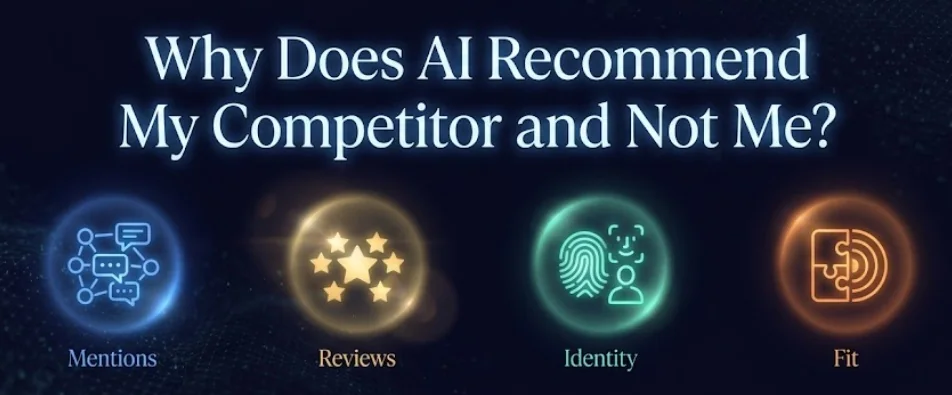
When a patient asks an AI tool for a dentist, the tool runs web searches in the background. It reads the pages that come back, then names the practices those pages mention most often and most favorably. The AI isn’t forming its own opinion of your clinical work. It’s repeating what the web already says about you. We explain why that favors some businesses over others in Why Does AI Recommend My Competitor?
What ChatGPT read
After ChatGPT gave its Houston list, we asked a follow-up: “What sources did you use for that answer?” It named five:
- A Houston dentist ranking site that combines ratings from several platforms
- A review page that pulls in a practice’s Google reviews
- One practice’s own patient review page
- That practice’s website, which ChatGPT described as the place for “services, credentials, technology and insurance information”
- A dentist’s profile on Healthgrades

What Perplexity read
We asked Perplexity the same question. Its sources included Houston dentist ranking sites, a “5 Best Dentists in Houston” roundup and a “5 Best Cosmetic Dentists in Houston” roundup. It also cited Tebra’s Houston dentist finder, WebMD’s doctor directory, Zocdoc and Houstonia magazine’s Top Dentists list.
Why insurance kept coming up
Both tools raised insurance without being asked. Perplexity opened its answer by saying the right dentist depends on your insurance, your neighborhood and the kind of care you need. ChatGPT offered to narrow its list to dentists that accept the patient’s insurance.
That tells you how these tools work. The AI is matching patients to practices, and it can only match you on details it can find. For a deeper look at where these tools pull information from, see Where Does ChatGPT Get Its Information?

What Five AI Engines Said About Getting Recommended
We also asked the AI tools directly. Using AnswerBuilders, we put the same question to ChatGPT, Claude, Perplexity, Google AI Overviews and Google AI Mode: “How do I get my dental office recommended by AI assistants like ChatGPT?”
All five gave closely matching advice:
- ChatGPT said to claim and fully fill out your map and directory profiles, including Healthgrades.
- Claude said there is no ChatGPT business listing to buy and no paid placement.
- Perplexity said to clearly list the insurance you accept and your emergency availability.
- Google AI Overviews said to keep your name, address and phone number consistent on Google Maps, Apple Maps and Bing Places.
- Google AI Mode said AI tools pull heavily from trusted directories such as WebMD and Healthgrades.
What about ChatGPT ads?
ChatGPT does show ads now. In fact, a dental ad appeared right under our Houston answer. It was labeled “Ad” and sat below the answer, not inside it. You can buy an ad. You can’t buy your way into the list of practices ChatGPT recommends. That spot is earned through the steps below, which line up closely with what we found when we studied how brands get cited by AI.
Step 1: Claim Your Profiles on the Sites AI Checks
Start with the general listings: your Google Business Profile, Bing Places, Apple Maps and Yelp. Then move to the dental and health directories. Healthgrades, Zocdoc and WebMD all showed up in the sources we saw. Vitals and the ADA’s Find-a-Dentist tool are worth claiming too.
On every profile, use the exact same practice name, address and phone number. Choose the right categories, list your services, add your hours and photos, and link to online booking if you offer it. When every listing matches, the AI can be confident they all describe the same practice.
Step 2: Put Insurance, New Patients and Hours in Plain Text
Patients ask AI tools the same things they ask your front desk. Put the answers on your website, written as plain text:
- Which insurance plans you accept
- Whether you’re taking new patients
- Whether you handle dental emergencies
- Your evening and Saturday hours
- Whether you offer sedation for anxious patients
Perplexity and Claude both called out insurance and new-patient status in their advice. Perplexity’s Houston answer also pointed out practices with Saturday hours and same-day emergency care. If those details only live in a PDF, an image or a phone call, the AI can’t use them.

While you’re at it, make sure your site doesn’t block the crawler ChatGPT uses for search. It’s called OAI-SearchBot, and OpenAI lists it on its crawler overview page. Your web developer can check your robots.txt file in a few minutes and add Dentist schema markup, which labels your practice details in a format machines read easily.
Step 3: One Page per Service, Plus Real Dentist Bios
Give each main service its own page: cleanings, crowns, implants, Invisalign and emergency care, for example. Open each page with a short, direct answer to the question a patient would ask, such as “Do you offer same-day emergency appointments in Houston?” Then explain who does the treatment, what to expect and how to book.
Next, write a real bio for every dentist. Include dental school, years in practice, specialty training and professional memberships. When ChatGPT explained how it would judge a dentist beyond star ratings, it listed education, credentials, years of experience and specialty training. Make those facts easy to find.
Keep every claim accurate. Your state dental board sets advertising rules, including how you describe specialties, so check them before you publish.

Step 4: Get on the Local Lists AI Reads
This is the step most practices skip, and it’s the one that moves the needle. In Houston, the AI leaned on dentist ranking sites, “best dentists” and “best cosmetic dentists” roundups, and a city magazine’s Top Dentists list. Here’s how to find the ones that matter in your city:
- Ask ChatGPT and Perplexity for the best dentist in your city.
- Ask each one for its sources.
- Write down every list, directory and article they name.
- Contact each site and ask to be reviewed or added.
- Pitch your local paper or city magazine on a patient topic you know well.
Each new mention on a page the AI already trusts makes your practice more likely to show up next time. One caution: publishing your own “best dentists in our city” article with your practice at the top is not the same thing. We looked at that tactic in Is Google Targeting Self-Promo Listicles?

Step 5: Earn Reviews in More Than One Place, and Test Monthly
The sources we saw pulled reviews from Google, Zocdoc and Tebra, plus ranking sites that combine reviews from several platforms. So don’t stop at Google. Ask happy patients for honest reviews on more than one site, reply to every review and never offer incentives or script what patients say.
Then test. Once a month, ask the AI tools the questions your patients ask, such as “family dentist accepting new patients in” your city. Check whether your practice is named and which sources the AI used. Answers change as the tools update, so keep checking.
Frequently Asked Questions
Can a dental practice pay to be recommended by ChatGPT?
No. ChatGPT sells ads, but they’re labeled and shown apart from the answer. The practices named inside the answer are there because the pages ChatGPT read mention them. That placement can’t be bought.
Which directories matter most for dentists in AI search?
In our Houston test, the AI cited Healthgrades, Zocdoc, WebMD and Tebra, along with local ranking sites. The five engines we asked also named Google Business Profile, Bing Places, Apple Maps and Yelp. Start with those, then add the directories your own city’s AI answers cite.
Should my website list the insurance plans we accept?
Yes. Insurance came up in both the ChatGPT and Perplexity answers, and Perplexity and Claude both told practices to list it clearly. If a patient asks for a dentist who takes their plan, the AI needs to find that detail on a page it can read.
How long does it take to start showing up?
There’s no fixed timeline. It depends on how quickly new profiles, reviews and mentions go live, and on how often each AI tool refreshes what it reads. Monthly testing shows you when the answers start to change.
Is this different from dental SEO?
It overlaps a lot. Strong dental SEO, such as clear service pages, accurate listings and links from trusted sites, also helps AI tools find and trust your practice. The newer part is focusing on the specific pages AI answers cite. That practice is often called generative engine optimization, or GEO. Our guide What Is GEO? explains it in more detail.
Watch the Full Walkthrough
The video at the top of this page walks through all five steps in about six minutes, with the real ChatGPT and Perplexity answers on screen. If you’re not a dentist, start with our overview, How to Get Your Business Recommended by ChatGPT, or see the guide for law firms.
See Which Pages AI Cites for Your Practice
Checking dozens of questions across five AI tools by hand gets old fast. AnswerBuilders asks ChatGPT, Claude, Perplexity and Google’s AI the questions your patients ask. It shows whether your practice is named, and it lists every page the AI cited. Those pages become your outreach list.
AI recommends businesses based on the web pages it reads. We show you which pages those are, and then we get you onto them.
If you’d rather have the work done for you, the AnswerBuilders outreach program contacts every one of those sites on your behalf.
Start with a simple test today. Ask ChatGPT for the best dentist in your city. If your practice isn’t on the list, you now know exactly where to begin.
About the author

Justin Davis is the founder of Link Builders, a white-label backlink agency, and has been building links since 2015 for more than 150 clients in law, healthcare, real estate, software and other industries. After years of doing prospecting research by hand, he built an AI agent link building system that handles each step, from finding link opportunities and vetting sites to finding contacts and preparing outreach. He now works every project himself, running that system for agencies and in-house SEO teams, earning the links and mentions that help their clients show up in Google and in AI answers, and teaches it on YouTube. He also built AnswerBuilders, the AI visibility platform Link Builders uses to find the pages AI answers cite. Find Justin Davis on YouTube, LinkedIn and X.