Where Does ChatGPT Get Its Information? Why It Cites Different Pages Than Google
ChatGPT gets its information from two places: what it learned during training, and what it finds when it searches the web. For current questions, it rewrites what you typed into one or more shorter searches, sends them to its search partners and its own crawler, then decides which pages to cite. That last step is why its sources often look nothing like Google’s first page.
The gap is large. Studies by Ahrefs found that only about 7% to 12% of the pages ChatGPT cites rank in Google’s top 10 for the same question. Google’s own AI Overviews cite top-10 pages far more often. If you want your business named in both places, you need to understand why they pick different sources.
I’ve built backlinks since 2015, and the question I hear most from business owners now is some version of “Why does ChatGPT recommend someone else when we rank on Google?” This article answers it with the data.
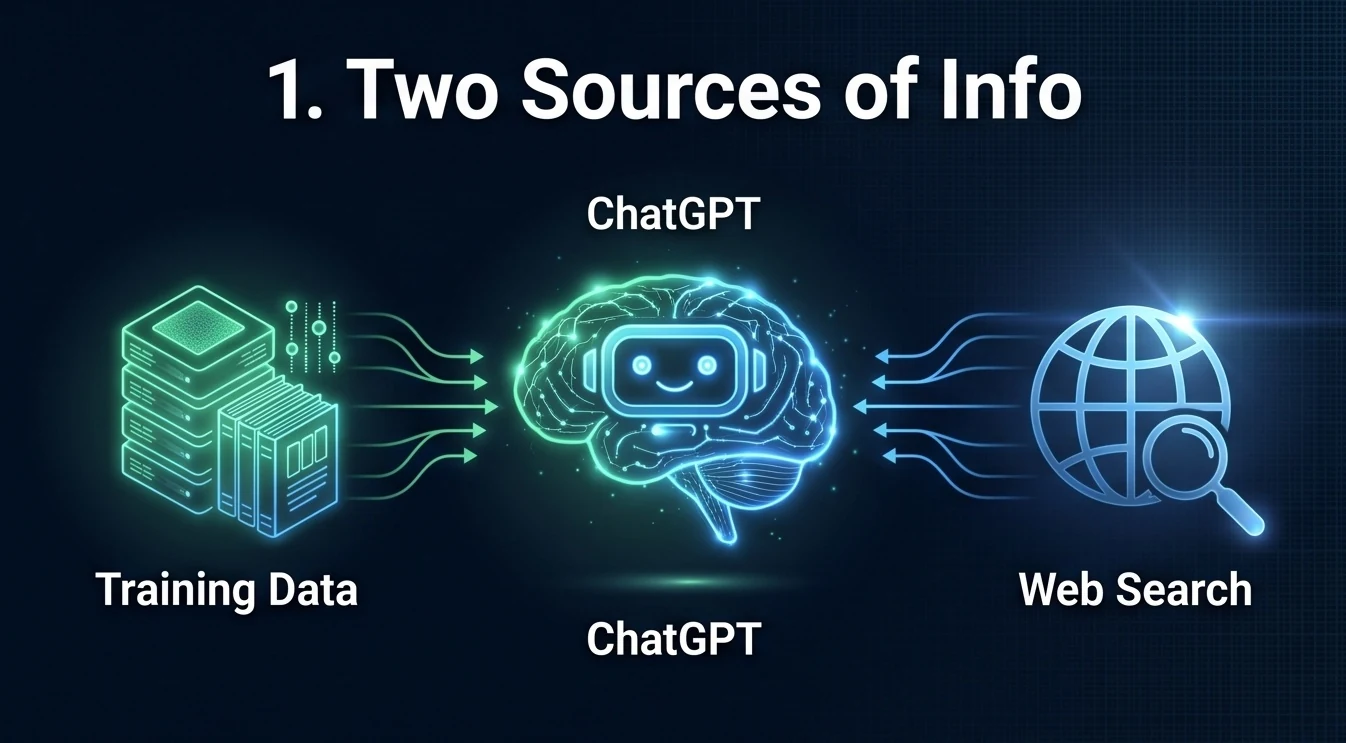
Two Places ChatGPT Gets Information
What It Learned in Training
ChatGPT’s language model learned from a very large body of text before it was released. That training gives it general knowledge, such as what a backlink is or how a roof gets replaced. It does not tell it which roofer in your city opened last month, what your prices are this year, or which agency a trade site recommended last week.
What It Finds With Web Search
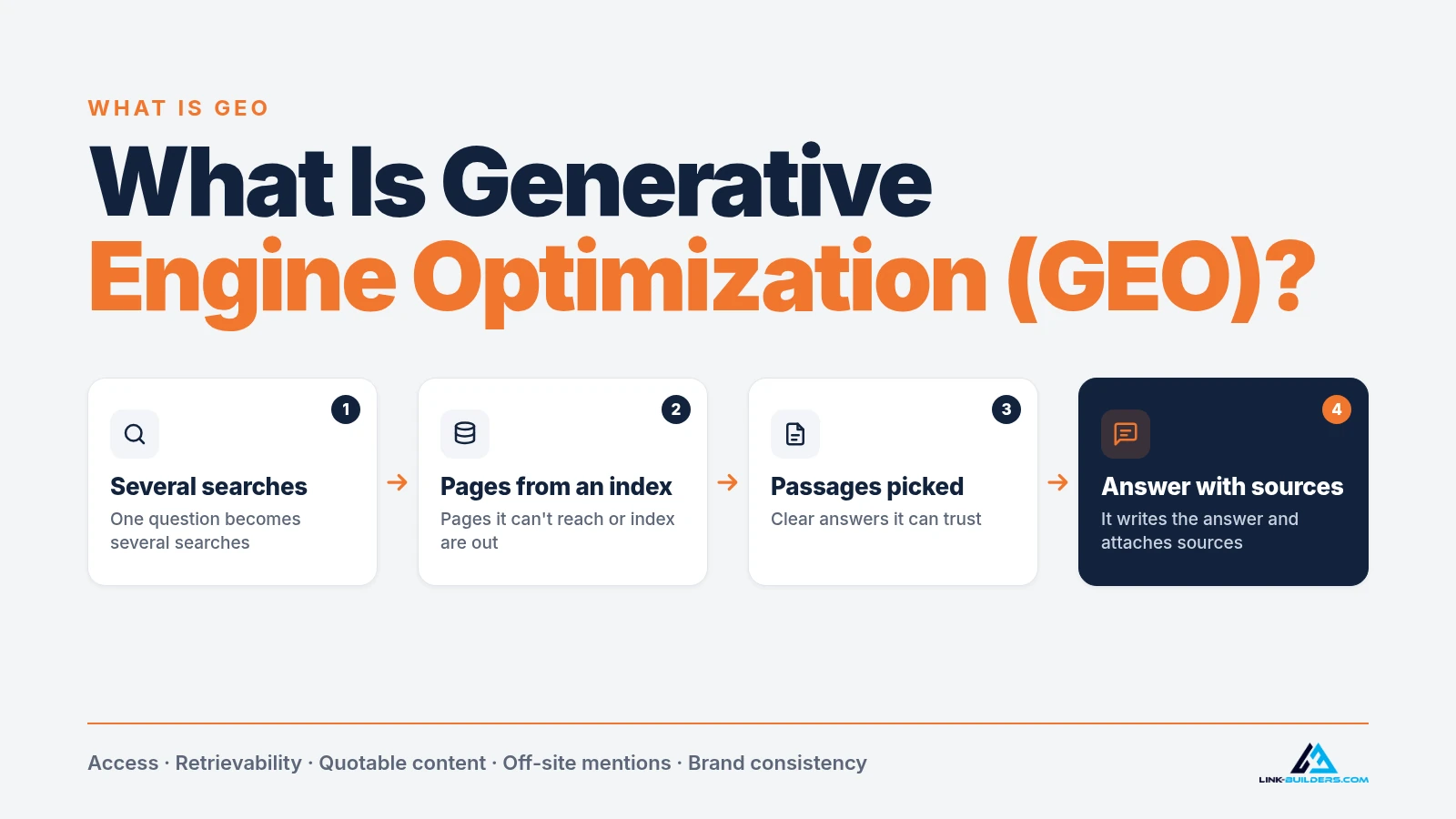
For anything current, ChatGPT searches the web. OpenAI’s help page on searching the web with ChatGPT explains the process in plain terms. When ChatGPT partners with other search providers, it usually rewrites your question into one or more targeted searches and sends those to the providers. After it reviews the first results, it may send more specific follow-up searches. The same page points readers to Microsoft’s and Shopify’s privacy policies for how those providers handle the searches.
OpenAI also says ChatGPT ranks search results using several factors meant to find relevant, reliable information, and that placement is not guaranteed. To be eligible at all, a site has to allow OpenAI’s search crawler, OAI-SearchBot, and its host or CDN must not block OpenAI’s published IP addresses.
So when ChatGPT cites a page, three things happened first. It turned your question into its own searches. It gathered results from more than one source. Then it chose which pages to show.
Does ChatGPT Use Google?
It may, at least in part. Reports in 2025 said OpenAI was pulling Google results through a third-party provider. But the pages ChatGPT cites still don’t match what Google ranks.
Ahrefs ran 3,311 short keywords through ChatGPT and compared the cited pages with Google’s results. Only 10% of ChatGPT’s cited pages ranked in Google’s top 10, and only about 21% appeared anywhere in the top 100. Ahrefs concluded that ChatGPT applies its own selection layer before it cites anything, so ranking well for a query does not guarantee a ChatGPT citation.
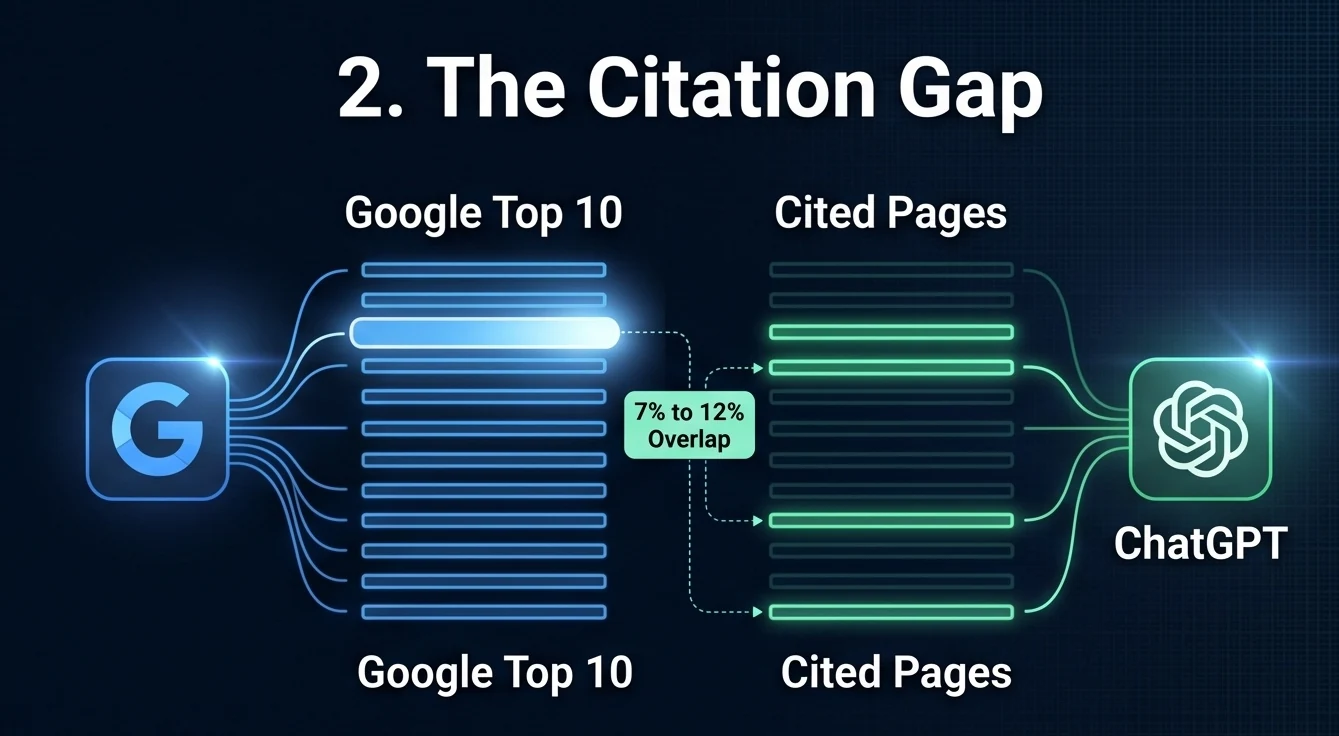
How Often AI Tools Cite Google’s Top 10
Here is how the main AI tools compare. Each figure is the share of cited pages that also ranked in Google’s top 10 for the same question.
| AI tool | Share of cited pages in Google’s top 10 | Study |
|---|---|---|
| Google AI Overviews | About 38% | Ahrefs, March 2026, 863,000 searches |
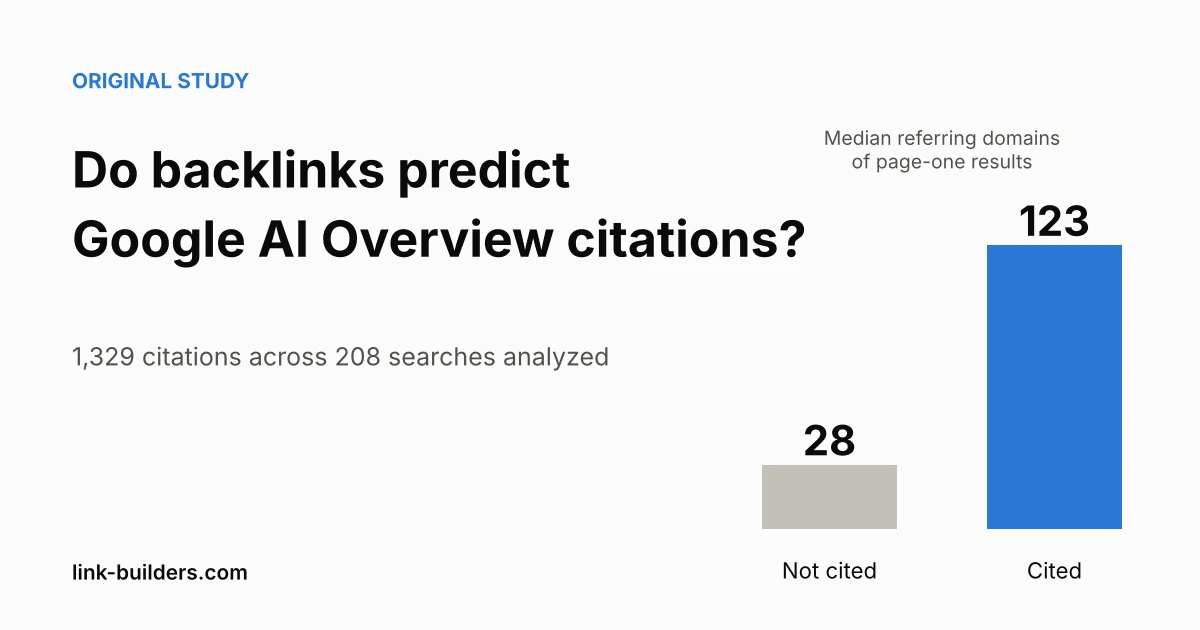
| Google AI Overviews | 36% of citations; 77% of answers cited at least one page-one result | My study, 208 searches, August to October 2026 |
| Perplexity | 28.6% for long questions, 65% for short keywords | Ahrefs, August 2025 and September 2025 |
| ChatGPT | About 7% for long questions, 10% for short keywords | Ahrefs, September 2025 |
| Gemini and Copilot | About 8% for long questions | Ahrefs, August 2025 |
Two patterns stand out. Google’s AI Overviews still lean on the pages Google ranks, even though that share fell from about 76% in mid-2025 to about 38%, a drop Ahrefs links partly to Google’s newer Gemini models and partly to its own better tracking. ChatGPT, Gemini and Copilot lean on Google’s top 10 far less. Perplexity sits in between and tracks Google closely for short searches.
These studies used different question sets and dates, so treat the numbers as ranges, not exact scores. The gap between Google’s AI and the chatbots shows up in every one of them.
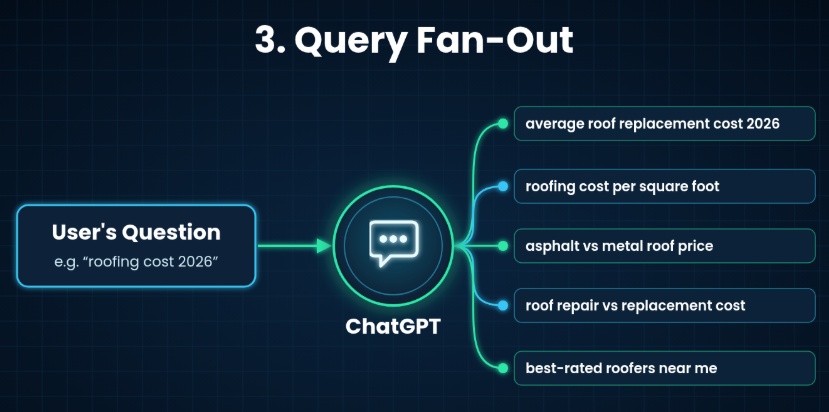
Why ChatGPT Picks Different Pages
It Searches for Different Things Than You Typed
ChatGPT rarely searches your exact words. It breaks a question into smaller searches, a step Google also uses for its own AI features and calls query fan-out. A page that ranks first for your exact question may never show up in the searches ChatGPT actually runs. In Ahrefs’ tests, ChatGPT’s fan-out searches had the lowest overlap with Google of any query type, at about 7%.
It Ranks Results Its Own Way
Even when ChatGPT pulls from the same search results as Google, it re-ranks them. OpenAI says its ranking uses several factors aimed at relevance and reliability. That is a different scoring system from Google’s, so the order changes before anything gets cited.
It Picks the Same Sites, but Different Pages
This is the most useful finding for business owners. In the Ahrefs short-keyword study, about 32% of the domains ChatGPT cited ranked in Google’s top 10, compared with only 10% of the exact pages. ChatGPT cited ranking domains about three times more often than ranking pages. In other words, it trusts many of the same websites Google does, but it often quotes a different page on that site.
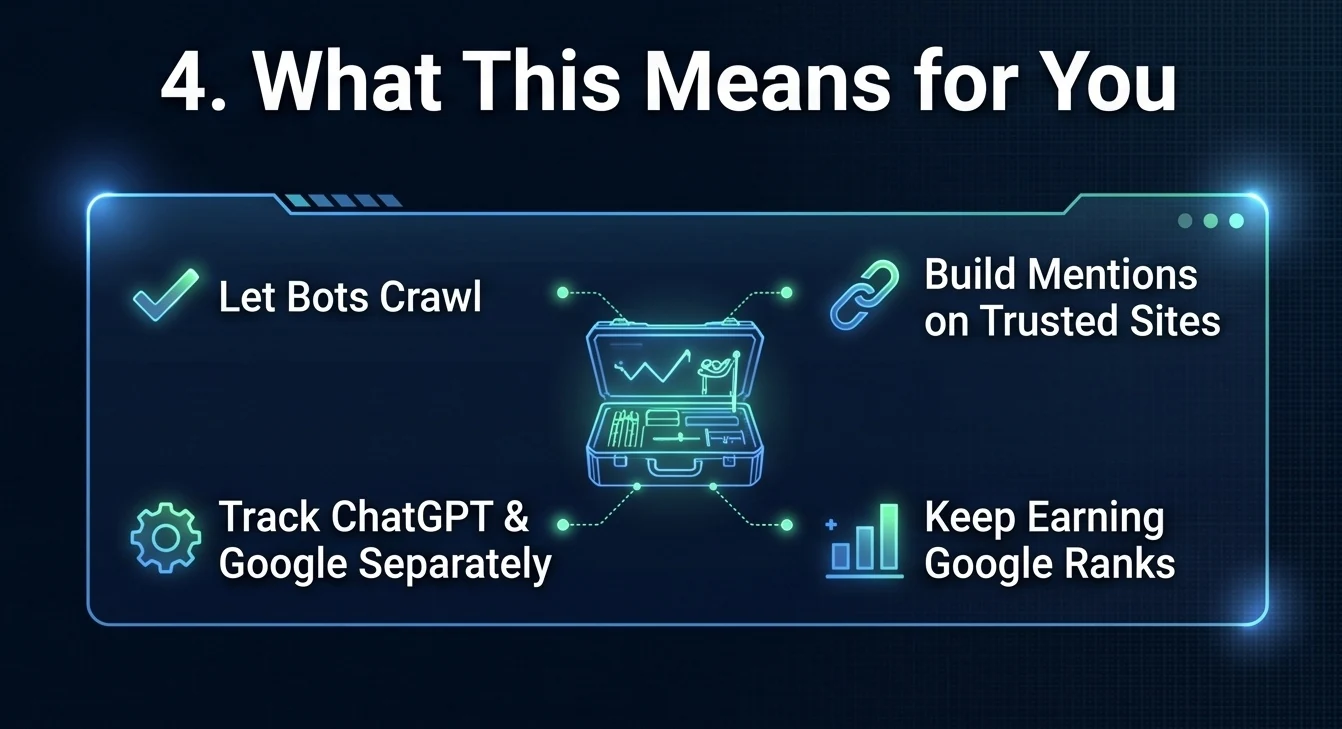
What This Means for Your Business
If you want to be named in both Google’s AI and ChatGPT, rankings alone won’t do it. Here is how I’d split the work.
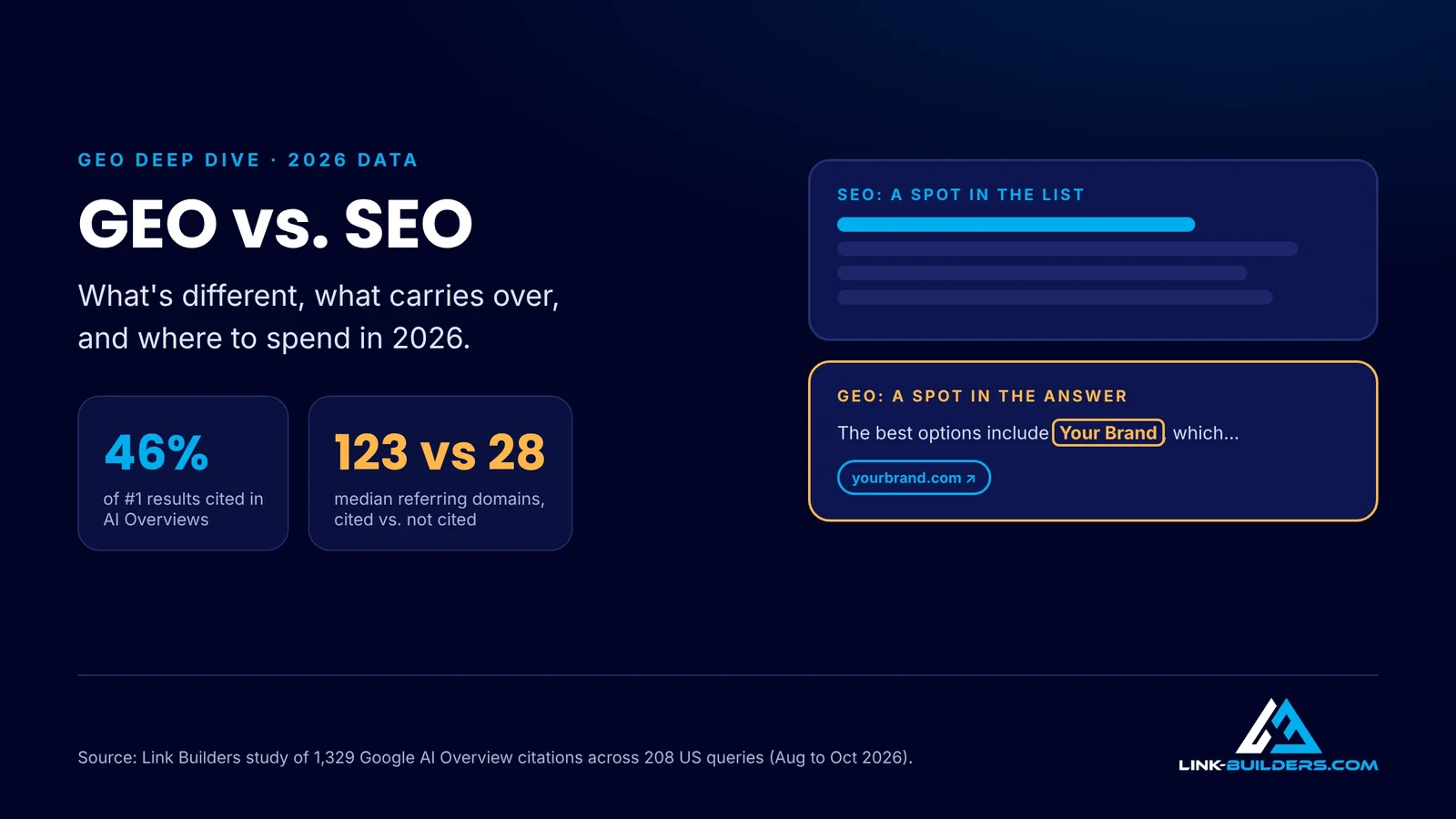
- Keep earning Google rankings. Google’s AI Overviews still cite ranking pages far more often than the chatbots do, and Google says there are no extra requirements beyond normal search eligibility. My study found the first organic result was cited 46% of the time.
- Let ChatGPT reach your site. Allow OAI-SearchBot and check that your firewall or CDN isn’t blocking it. My AI crawler map shows which bots to allow.
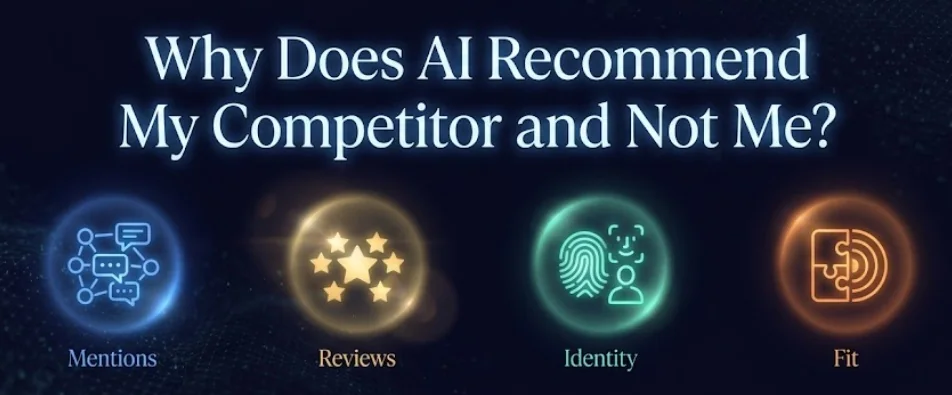
- Get named on the sites ChatGPT already trusts. Because ChatGPT picks trusted domains more than specific ranking pages, a mention on an industry site, review site or respected guide can matter more than another ranking of your own. To see which sites ChatGPT and other AI engines cite in your category, Link Builders uses AnswerBuilders and adds those pages to each client’s backlink target list. I cover the evidence in brand mentions vs. backlinks for AI search and the steps in how to get your brand cited by AI.
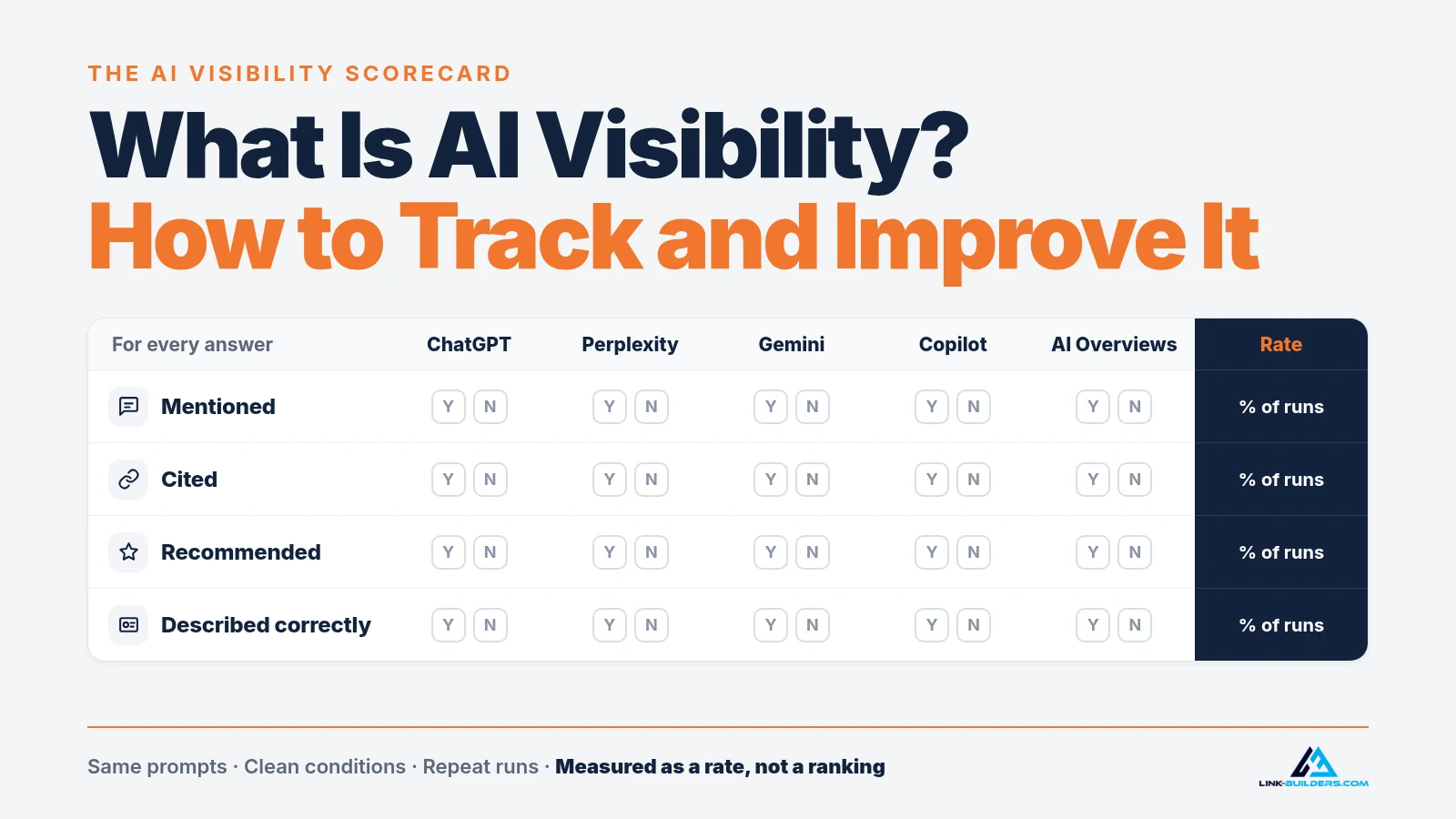
- Track each AI tool separately. A good week in Google’s AI says little about ChatGPT. Use the same buyer questions every month and record each tool on its own, as I explain in what AI visibility is and how to track it.
For the bigger picture on how this fits with SEO, read GEO vs. SEO.
FAQ
Does ChatGPT use Google search?
Partly, according to 2025 reports that OpenAI pulled Google results through a third-party provider. But its citations rarely match Google’s: in Ahrefs’ tests, only about 7% to 12% of the pages ChatGPT cited ranked in Google’s top 10 for the same question.
Does ChatGPT use Bing?
OpenAI’s help center says ChatGPT search partners with other search providers and points to Microsoft’s privacy statement for how those searches are handled. OpenAI also runs its own crawler, OAI-SearchBot, and applies its own ranking, so ChatGPT’s results are not simply Bing’s results.
Can I make ChatGPT cite my website?
No one can guarantee it, and OpenAI says placement is not guaranteed. You can make it more likely by allowing OAI-SearchBot, writing pages that answer questions directly, and getting your brand named on websites that ChatGPT already cites for your topic.
Key Takeaways
- ChatGPT answers current questions by rewriting them into its own searches, gathering results from search partners and its own crawler, and re-ranking them.
- Only about 7% to 12% of the pages ChatGPT cites rank in Google’s top 10 for the same question. Google’s AI Overviews cite top-10 pages far more often, at about 38%.
- ChatGPT cites the same trusted websites as Google about three times more often than the same exact pages.
- Rankings help most with Google’s AI. Mentions on trusted sites help most with ChatGPT. Most businesses need both.
If you want help getting named on the sites AI tools already trust, read about my GEO agency built on off-site authority or request a free sample of 20 vetted link opportunities for your site.
Sources
- Searching the web with ChatGPT, OpenAI Help Center
- ChatGPT May Scrape Google, but the Results Don’t Match, Ahrefs, September 3, 2025
- Only 12% of AI Cited URLs Rank in Google’s Top 10 for the Original Prompt, Ahrefs, August 11, 2025
- Update: 38% of AI Overview Citations Pull From the Top 10, Ahrefs, March 2, 2026
- AI features and your website, Google Search Central
- Do Backlinks Predict Google AI Overview Citations?, Link Builders, October 8, 2026
About the author

Justin Davis is the founder of Link Builders, a white-label backlink agency, and has been building links since 2015 for more than 150 clients in law, healthcare, real estate, software and other industries. After years of doing prospecting research by hand, he built an AI agent link building system that handles each step, from finding link opportunities and vetting sites to finding contacts and preparing outreach. He now runs that system with the Link Builders team for agencies and in-house SEO teams, earning the links and mentions that help their clients show up in Google and in AI answers, and teaches it on YouTube. He also built AnswerBuilders, the AI visibility platform Link Builders uses to find the pages AI answers cite. Find Justin Davis on YouTube, LinkedIn and X.