The Truth About Scalable Link Building – What No One Tells You
Updated on · Originally published

Today, I want to tackle one of the most misunderstood parts of our industry: scaling link building operations. I’ve been building links since 2015 for more than 150 clients, and I’ve learned that what most people think about scaling link building is flat-out wrong.
The Myth of Easy Scaling
Let me start with the biggest misconception: that link building at scale is easy or straightforward. I can’t tell you how many times I’ve heard someone say, “Once you’ve built ten links, you can just replicate the process for a hundred links, right?”
Wrong.
The truth? Finding hundreds of qualified, niche-relevant backlink opportunities every quarter takes hundreds of hours, even when you already have established connections. The process involves:
- Constantly refreshing your prospect list
- Qualifying each potential website
- Creating unique, valuable content
- Managing relationships with dozens or hundreds of webmasters
- Tracking placements and performance
- Keeping anchor text distribution natural
My advice, after doing this since 2015? Start by finding one amazing partner. Then find another. And another. Link builders who try to scale alone almost always fail or compromise on quality.
What My Own Data Says About Scale
When people try to scale, they usually scale the two easy steps: bigger lists and faster sending. The filter in the middle stays the same size, or quietly disappears. I have numbers on what that does.
Across six of my cold outreach campaigns, I contacted 6,657 prospects. One campaign contacted 3,698 prospects and earned a 5.4% positive response rate. Another contacted 275, roughly a thirteenth of the volume, and earned 23.6%. Same operator, same process, same tools. The small, tightly targeted list won by a mile. The full breakdown is in my response rate study.
A 5.4% response rate isn’t a failure of outreach. It measures how many of those prospects should never have been contacted in the first place. That’s the real lesson about scale: you scale the qualifying, not the sending.
Quality vs. Quantity: There Is No Debate
Here’s a harsh truth: the number of links never matters unless the sites are all qualified. I’ll say that again. The sheer number of backlinks means nothing if they’re not coming from relevant, authoritative sites that make sense for your business.
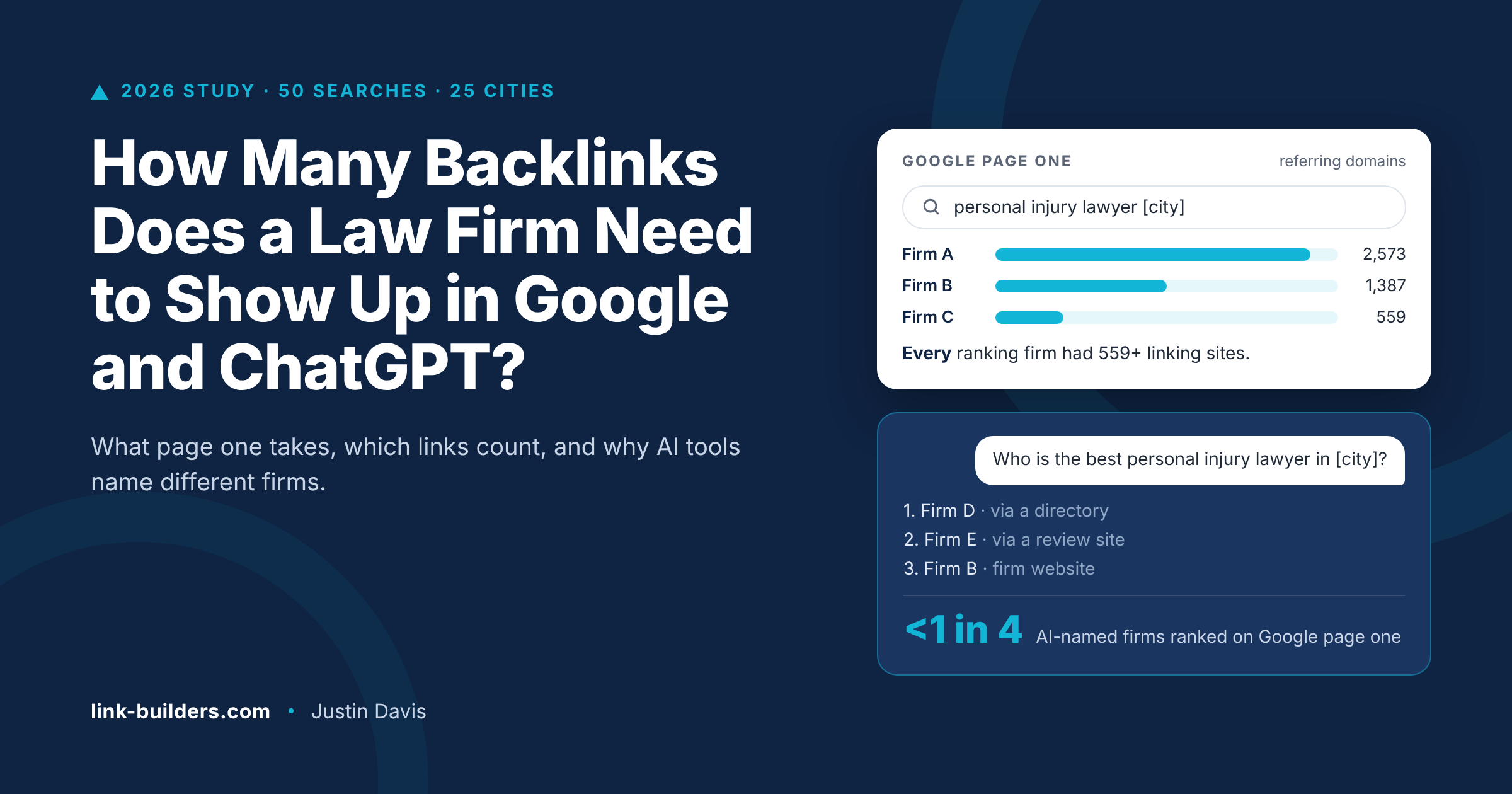
I’ve seen businesses with 30 high-quality, relevant backlinks outperform competitors with 300 mediocre ones. Why? Because Google’s algorithms have gotten extraordinarily good at telling valuable endorsements from meaningless ones. That showed up in my law firm page-one check too: every ranking firm had hundreds of linking sites, but many of those links weren’t worth much.
When I scale link building for clients, the qualification process stays the same whether we’re building 10 links or 100. There are no shortcuts.
The Infrastructure of Scale
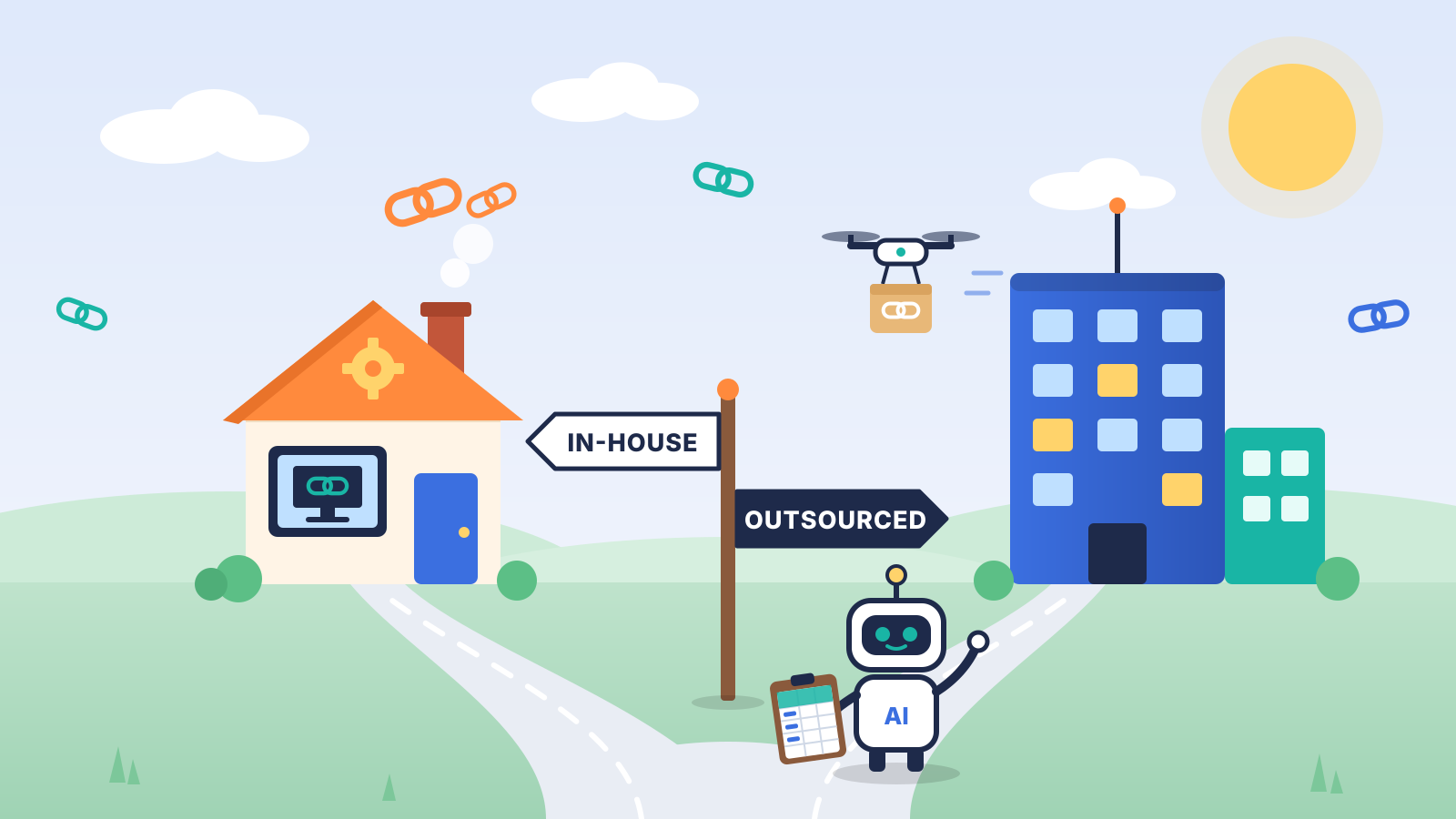
To build links at scale without sacrificing quality, you need systems. Use our in-house vs. outsourced link building responsibility matrix to decide which parts your team should own before you expand. Here’s what I’ve found essential:
- A robust outreach process, usually built around an email outreach platform
- A research process that compiles qualified backlink opportunities. For me, that’s now an AI agent with a human review step at the end
- Content creators who understand SEO and can produce valuable material
- A database that records every connection for future use
- Clear qualification criteria that never get compromised
- Project management tools to track progress across campaigns
- Quality control checkpoints at every stage
The database is particularly important. After years of building connections, my proprietary database of qualified websites has become my most valuable asset. It turns what would be hundreds of hours of prospecting into a streamlined operation.
The Network Effect
One realization changed my business: relationships with other link builders and SEO companies make scaling dramatically easier.
In the early days, I tried to do everything myself. Find opportunities, create content, build relationships, place links, track results. It was unsustainable. The breakthrough came when I started networking with other reputable link builders. We began sharing opportunities, with client permission, and specializing in different niches.
That approach let all of us:
- Access more qualified opportunities
- Specialize more deeply in specific areas
- Reduce prospecting time
- Scale more effectively
Now my network includes dozens of trusted partners, each with their own specialty areas and relationships. This isn’t just convenient. It’s the only truly sustainable way to scale quality link building.
The same logic works for agencies. If you need to scale link building for your clients without hiring a team, a white label partner does the work under your brand, or you can resell link building as your own service.
That standard is also how serious backlink builders separate durable campaigns from volume theater.
Essential Tools of the Trade
You can’t scale effectively without the right tools. Here’s what I consider essential:
- Ahrefs. It’s the tool I rely on most for link prospecting, mainly for competitor backlink data. It also tracks rankings, gained and lost backlinks, site audits and organic traffic. Semrush is the broader marketing suite, with toolkits for advertising, social and AI PR alongside SEO. I compare the two for link building in my Semrush vs Ahrefs comparison.
- Google Analytics and Search Console. These free tools show how your site is performing, and Search Console lets you request indexing for new content.
- Project management software. Asana, ClickUp or Monday.com, whichever you prefer. You need something to track campaigns across clients and websites.
- Email outreach tools. Platforms like Pitchbox, BuzzStream or Mailshake help systematize your outreach.
- Content management systems. You need an efficient way to produce, review and approve content at scale.
I used to say automated link building tools didn’t belong on this list. I’d put it more precisely now. Automating prospecting is a force multiplier. Automating outreach copy at scale is a fast way to burn your sender reputation. That’s how my own AI agent link building system works: the agents find and vet opportunities, find the contacts, prepare the outreach, and stop there. I wrote up the failure modes in what AI SEO agents still get wrong.
The Real Cost of Scaling
Let’s talk money. Scaling link building gets expensive quickly, and that catches many businesses off guard. If you’re an SEO or marketing agency planning a dedicated link building division, prepare for significant investment in:
- Personnel (researchers, outreach specialists, content creators)
- Software subscriptions
- Training and quality control
- Relationship building
For business owners scaling backlinks to their own websites, here’s my honest advice: outsource it. Find a specialized link building freelancer or company with a proven track record. You’ll likely end up with better links, faster results, and possibly lower costs than building an in-house operation from scratch. Before you pick one, here’s what to check before hiring a link builder.
A Final Word to Fellow Link Builders
Scaling is possible, but it takes infrastructure, relationships and unwavering quality standards. If you’re cutting corners to scale, you’re not scaling. You’re just increasing volume at the expense of value.
Remember: link building isn’t just about getting a link on a page. It’s about earning genuine endorsements from relevant authorities in your space. That doesn’t change whether you’re building ten links or a thousand.
[Editor’s note: This is part of our “Diaries of a Link Builder” series, where we share real insights from the trenches of link building.]
About the author

Justin Davis is the founder of Link Builders, which offers link building services to companies and white label link building to agencies, and has been building links since 2015 for more than 150 clients in law, healthcare, real estate, software and other industries. After years of doing prospecting research by hand, he built an AI agent link building system that handles each step, from finding link opportunities and vetting sites to finding contacts and preparing outreach. He now works every project himself, running that system for agencies and in-house SEO teams, earning the links and mentions that help their clients show up in Google and in AI answers, and teaches it on YouTube. He also built AnswerBuilders, the AI visibility platform Link Builders uses to find the pages AI answers cite. Find Justin Davis on YouTube, LinkedIn and X.