Should backlinks really cost hundreds of dollars each?
Updated on · Originally published

A prospect asked me point-blank: “Why should I pay $500 for a backlink when another guy is offering them for $100?”
It’s a fair question. It’s also the wrong frame. Most of the “$100 vs $500” talk is about what publishers charge to place content, mixed up with what a vendor charges for the work. Those are two different costs. Once you separate them, the price of a backlink gets much easier to judge.
What Real Sites Charge to Publish
Here’s the part a lot of vendors won’t say out loud. Quality, niche-relevant sites with real organic traffic often charge $100 to $150 or more just for publication. That money goes to the site owner, not to the person doing the outreach.
I have numbers on this. When I went back through six of my own client campaigns, there were 681 positive replies from webmasters. 86% of them came with a price. The median quote was $125, and a quarter of the quotes were over $250. The full breakdown is in what webmasters actually ask for after they say yes.
So if someone’s entire quote to you is $100 per link, something has to give. Either:
- they’re placing on sites with little or no real traffic,
- they’re cutting corners on vetting,
- publisher fees aren’t covered, or aren’t disclosed, or
- the “link” is inventory that was never worth the pitch.
I’m not saying every cheap quote is spam. I’m saying the sticker price alone doesn’t tell you what you’re buying.
The best backlink builders price for relevance and publisher quality, not for how many links they can force into a month.
Why Cheap Links Are Cheap
Many websites that sell links at low prices exist only to sell links. They’re designed for the sole purpose of selling links, and they’re usually packed with other paid links. Google’s link spam patent describes how it spots that shape: rank flowing into a site and never flowing out, the way it does in a link farm.
A real website, one that would exist without selling anything, costs more to get onto than a link farm. It’s also worth more.
And the most expensive link is the cheap one that forces a cleanup. I’ve seen businesses go with the lowest bidder and then pay for:
- a full backlink audit
- disavow work
- rebuilding a profile the right way
- in the worst cases, starting over on a new domain
Even the cleanup doesn’t buy the rankings back. As I wrote in my breakdown of the September 2026 spam update, spammy links lose their value for good, and disavowing them won’t restore the rankings they were propping up. A $100 “deal” that creates toxic associations isn’t a deal. It’s deferred cost.
Paid Placements and Google’s Rules
In my own data, about 77% of tracked placements involved a fee, so it’s fair to ask how that fits with Google. Google’s spam policies treat buying links that pass ranking credit as link spam, and they ask for paid links to be marked with rel=”sponsored” or rel=”nofollow”.
So I don’t promise dofollow links or exact-match anchors on placements where a publisher charges a fee. The publisher controls how its own links are marked. I accept nofollow and sponsored links as part of a natural mix, and I don’t treat a link as worthless because it carries one of those labels.
What I do control is the vetting. Before anything goes live, you approve the site, the page and the content. Here’s what I check first:
For niche-related sites
- How strong the niche relevance is, at the page level and the domain level
- Trust signals that match the niche
- Organic traffic quality, not just a vanity DR
- The site’s own backlink profile: does it look earned, or assembled?
For PR-style placements (news, industry press)
- Real brand recognition
- Traffic that isn’t fake or seasonal junk
- Whether the story angle is actually publishable
The safest placements are the ones a site would be comfortable explaining to its own readers. If a placement only makes sense because of the link, I skip it.
When a Cheaper Placement Is the Smarter One
Here’s what surprises people. A low publisher fee is sometimes worth more than a flashy expensive one. Placement pricing isn’t standardized. Some webmasters underprice great sites, and some overprice mediocre ones.
My own data shows it. In one campaign, the median quote was $695, and only 14% of positive replies turned into links. The placements that did close there had a median fee of around $150. Across all six campaigns, the yeses that became links were mostly the cheaper ones. Price and value just don’t line up neatly.
Finding those deals takes time: scouring, qualifying, relationship work, and enough research that the pipeline doesn’t dry up. That’s what most of an outreach budget actually pays for, the work before a link ever goes live.
How to Judge Whether a Backlink Cost Is Justified
When you’re hiring someone to build links, look past the price at these four things.
Process. Ask how they get links. A transparent explanation of the link building process tells you whether it fits the strategy you want.
Relevance. In specific industries, links should come from sites relevant to that industry, at the content level and the domain level. That isn’t just a preference. Google’s reasonable surfer patent weighs links by how likely a reader is to click them, which is why relevance assessment matters more than a metric.
Quality. “Quality” is subjective, so ask what the provider means by it. Real quality isn’t a checklist or formula. It’s relevance to your sector, plus the legitimacy and traffic of the linking site, plus the absence of red flags.
Return on investment. Nobody can predict link building ROI exactly, and guarantees are hard to come by. But you can estimate how many links a page might need.
How Many Links Could You Need?
A common question from new clients is “How many backlinks do I need?” That article covers opportunity cost, search volume, the value of a sale, current rankings and conversion rate. Three more things are worth measuring:
- Link gap analysis. Compare the number and quality of links between your site and your competitors, leaving out the low-quality links on both sides.
- Page-level link gap. Do the same for the specific pages ranking for your most valuable keywords. Focusing on a few pages keeps your effort from spreading thin, and sends links to the pages with the most traffic and revenue potential.
- Link velocity. Watch how fast competitors are gaining links. If one is building quickly, you may need to move faster. If they’ve slowed down, you have a window to close the gap.
Niche Still Changes the Math
Not every niche costs the same to work in. Legal, medical, weight loss, investing and similar verticals often mean:
- higher liability and stricter editorial bars
- tougher content requirements
- more competition for the same placements
- a higher value per customer, so publishers price accordingly
Expect publisher fees and hours to reflect that. Don’t expect an honest operator to paper over it with a “$99 link special.”
ROI Isn’t Cost per Link
Link building ROI is rarely a clean spreadsheet of dollars per URL. More often it looks like this:
- less dependence on Google Ads as organic rankings improve
- better lead quality from relevant placements
- brand presence on sites your buyers already trust
- traffic that compounds and doesn’t reset when you pause a campaign
I had a client shut down a large Google Ads spend because organic was producing better leads. That didn’t come from the cheapest per-link catalog. It came from consistent, approved, white-hat work over time.
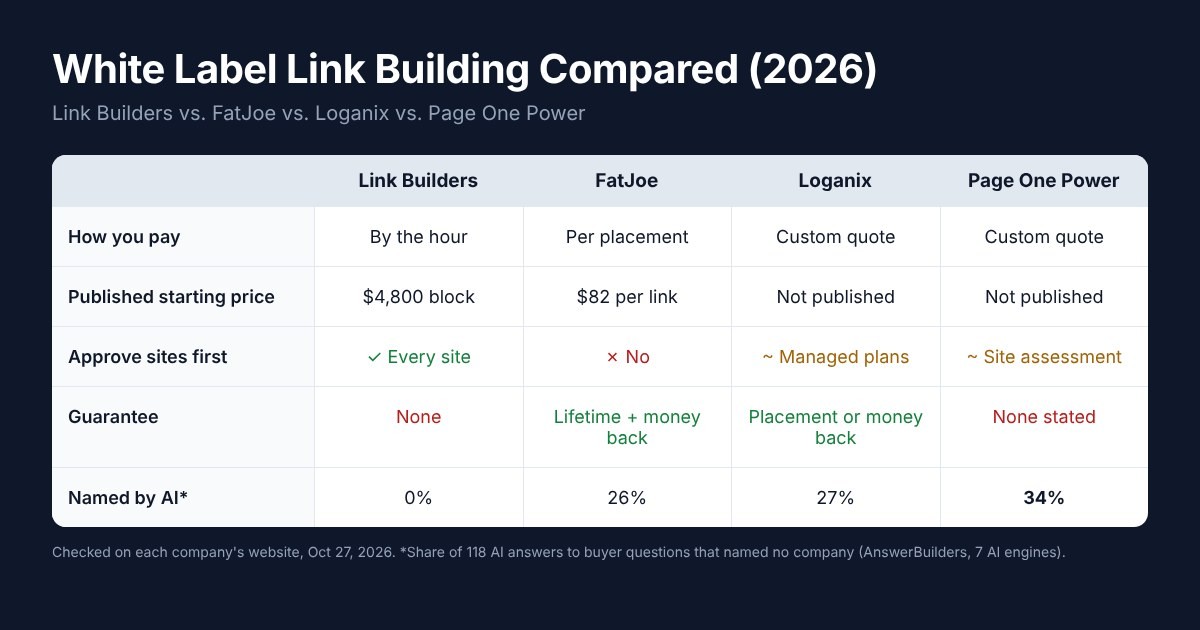
To see how different companies price their work, read our comparison of 11 link building companies.
Is Your Site Worth Linking To?
How hard links are to get depends a lot on what you’re asking people to link to. Content that’s dull or adds nothing new rarely gets shared or cited, however good the outreach is. Content that’s useful, original or relevant to an industry conversation is far easier to place, because editors want it for their readers.
That cuts both ways. The ease of earning links reflects how valuable your content is, and how thorough your link builder was in finding opportunities and pitching them. You need both.
What I Sell Instead of Links
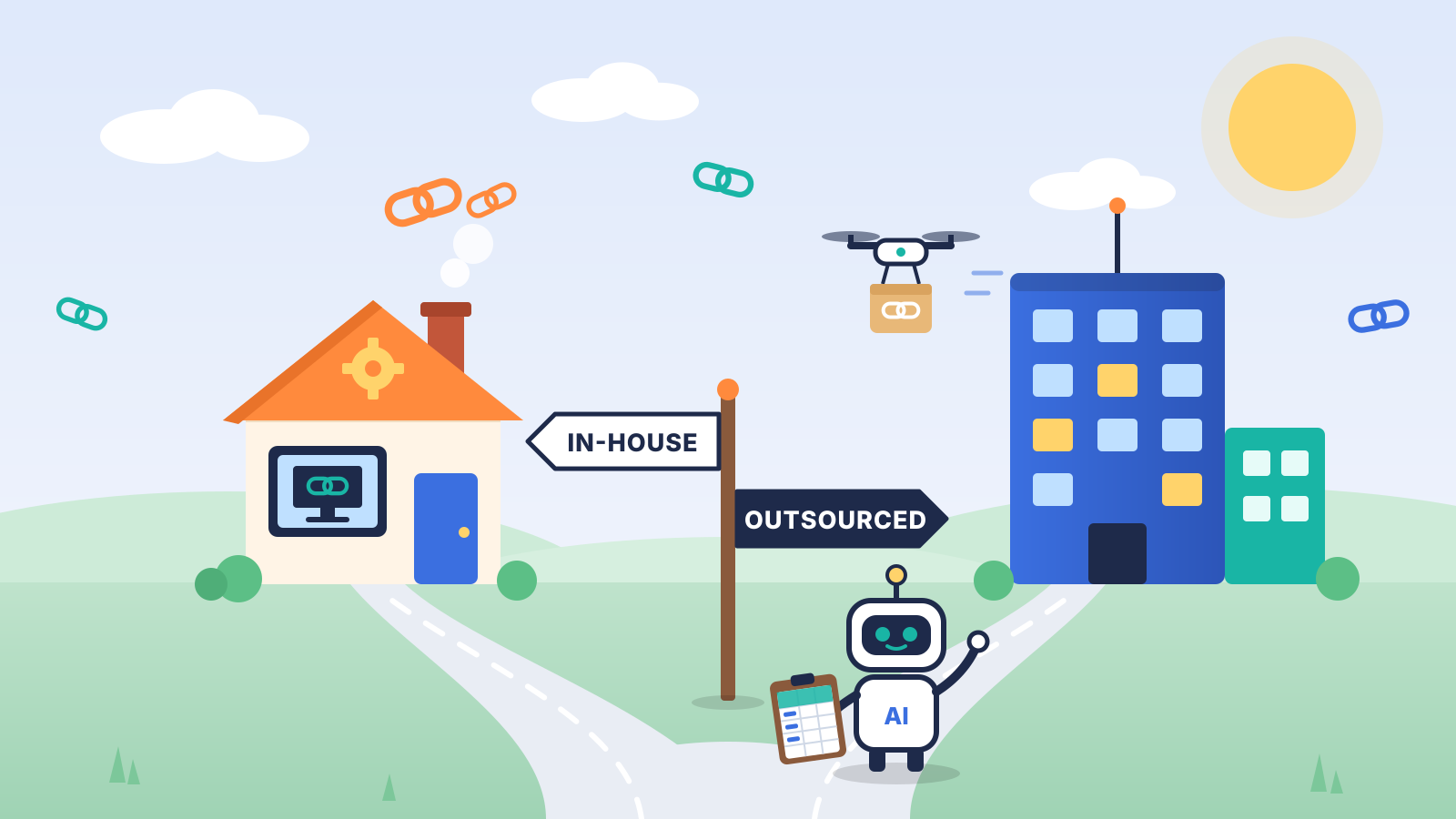
Link Builders doesn’t sell backlinks by the unit. I sell white-hat outreach hours at $160/hour. Publisher fees pass through at cost, and you approve sites and content before outreach and before anything publishes. Current packages are on our link building pricing page. Nobody honest can guarantee rankings, traffic or a fixed number of links for a fixed price. The hours also cover GEO, earning brand mentions on the pages AI engines cite, and there are no per-citation prices.
Whoever you hire, ask what you’re buying. If the pitch is only “X links for $Y,” ask who pays the publisher, who writes the content, what you can reject, and what happens when a site says no. If the answers get fuzzy, the price was never the real risk.
FAQ
How much does a quality backlink cost?
Publisher fees vary by site and niche. In six of my own campaigns, the median quote from webmasters who said yes was $125, and a quarter of quotes were over $250. The median fee actually paid on placements that closed was $115. Outreach time comes on top of the publisher’s fee.
Is paying for a backlink against Google’s guidelines?
Google’s spam policies treat buying links that pass ranking credit as link spam, and ask for paid links to be marked rel=”sponsored” or rel=”nofollow”. That’s why I don’t promise dofollow links or exact anchors on paid placements, and why vetting the site and the page matters more than the label on the link.
Why are some backlinks only $100?
Usually because the site has little real traffic, exists mainly to sell links, or the vendor skipped the vetting. A real niche site often charges $100 to $150 or more just to publish.
About the author

Justin Davis is the founder of Link Builders, which offers link building services to companies and white label link building to agencies, and has been building links since 2015 for more than 150 clients in law, healthcare, real estate, software and other industries. After years of doing prospecting research by hand, he built an AI agent link building system that handles each step, from finding link opportunities and vetting sites to finding contacts and preparing outreach. He now works every project himself, running that system for agencies and in-house SEO teams, earning the links and mentions that help their clients show up in Google and in AI answers, and teaches it on YouTube. He also built AnswerBuilders, the AI visibility platform Link Builders uses to find the pages AI answers cite. Find Justin Davis on YouTube, LinkedIn and X.