How many backlinks do I need?
Updated on · Originally published

By Justin Davis, Chief Link Builder at Link Builders
There’s no universal number of backlinks you need. The number depends on two things: how strong your page and site already are, and how strong the pages outranking you are. The useful way to answer the question is to measure the gap between your page and the pages already winning, count only the links that matter, and decide whether closing that gap is worth the investment.
Because I run a link building company, businesses ask me this almost every week. “How many links do we need?” “How much should we invest in our backlink profile?” Anyone who gives you a single number without looking at your search results is guessing with confidence. Here’s how I actually work it out.
Direct answer
There is no universal number of backlinks you need. The useful number is the page-level link gap: how many independent, relevant referring domains the pages already ranking for your keyword have, minus the ones your page has, after you throw out junk and links from the same owner. That gap is a planning figure. It is not a promise that you will rank, gain traffic, or get cited in AI answers if you close it. Rank still depends on the page itself, search intent, technical health, and everything else Google and AI answers consider.
The three worked examples later in this article are illustrative only. The businesses, keywords, and link counts are hypothetical. They are not measurements from real campaigns, tools, or clients, and they should not be used as targets.
Why There’s No Magic Number
Most “you need X links” advice falls apart for three reasons.
- Every search result is different. A local service keyword and a national software keyword can need completely different link profiles to compete.
- Raw counts lie. Ten links from sites owned by the same company may count as roughly one, and a profile built only from weak links can look like a link farm no matter how big it is. Quality and independence matter more than volume.
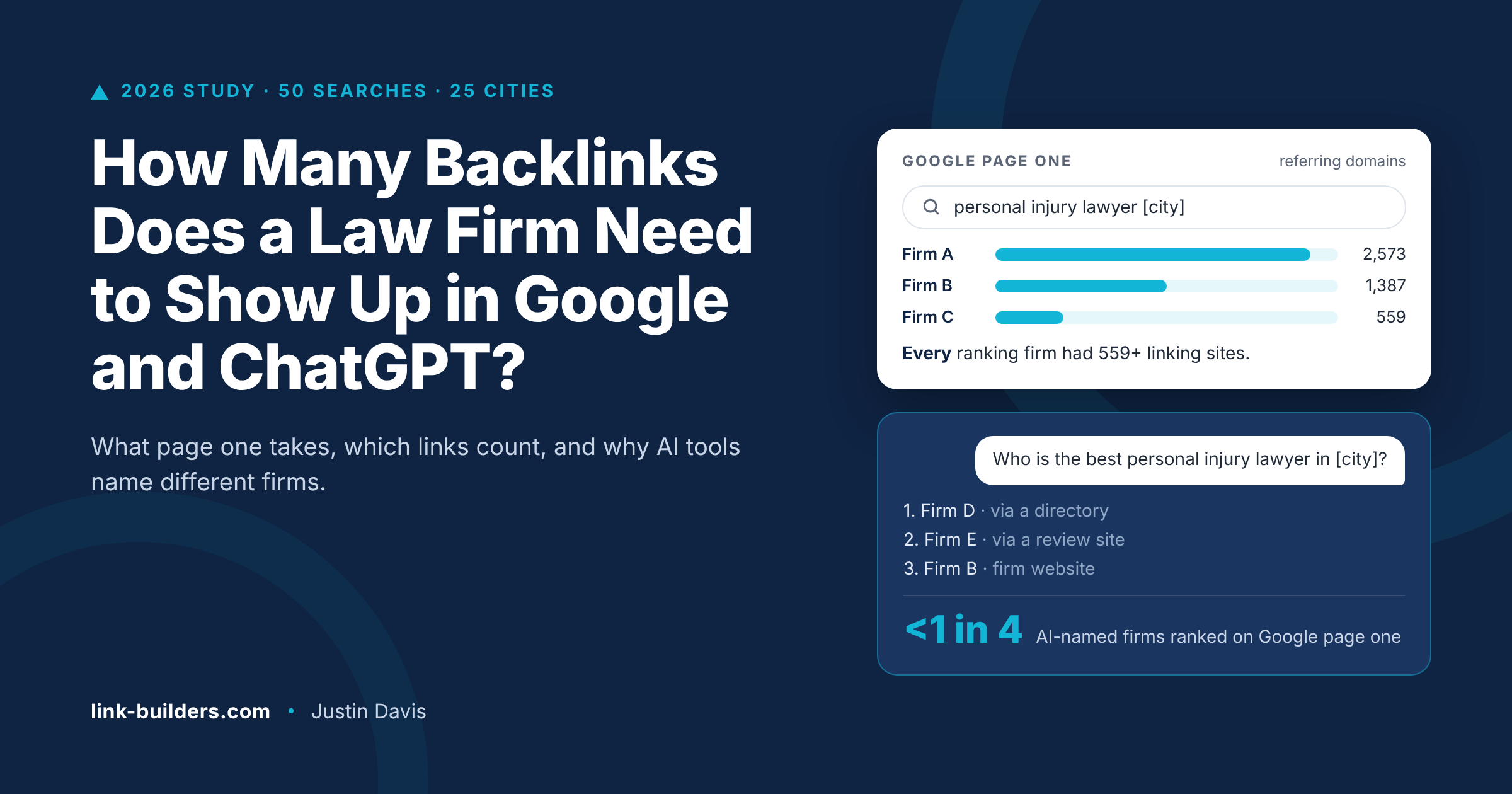
- Averages hide the spread. When I analyzed 1,000 law firm websites back in 2020, the average site had 79 referring domains, but the range ran from 0 to 2,037. The top 10% by traffic had at least about 200 referring domains, and sites with 4 or fewer averaged only about 7 organic visits a month. That data is from 2020 and shouldn’t be used as a target today, but the lesson holds: the average tells you almost nothing about what your page needs.
How I Estimate the Gap
How many links you need depends primarily on the SEO strength of your site and the SEO strength of your competitors, meaning the pages outranking you for your target keywords. This is the method I use.
- Pick the page, not the site. Decide which URL should rank for the keyword. Link building spread across a whole domain dilutes the effort.
- List the pages ranking in the top three to five. Not their homepages. The exact URLs Google is ranking.
- Count referring domains to each of those URLs with an SEO tool like Ahrefs or Semrush.
- Remove the junk. Spam, scraped directories, obvious link farms and sites owned by the same company don’t count. What’s left is the profile that’s actually doing the work.
- Compare with your page. The difference between your clean count and theirs is your page-level link gap.
- Check link velocity. Look at how fast those pages are still gaining links. If a competitor is adding links every month, you’re closing a moving gap. If they’ve stalled, you can catch up faster.
That gap is a planning number, not a promise. Rank still depends on content, intent match, technical health and everything else on the page. But it turns “how many links do I need?” into a question you can actually measure.
Three illustrative examples of the gap method
How to read these examples: Every business, keyword, and number below is hypothetical. I made them up to show the method from the previous section in practice. They are not real data, not averages from my clients, and not a forecast of how many links you will need. If a vendor treats numbers like these as a package or a guarantee, walk away. Run the same steps on your actual search results.
Example 1: A local service business (illustrative)
Imagine a residential electrician in a mid-size U.S. city. The URL you care about is a service page targeting a city-plus-service search, not the homepage. Local results also depend on the Google Business Profile, reviews, and citations, so this link gap is only one part of the work. For the local side, see local link building.
| Page | Clean referring domains (hypothetical) |
|---|---|
| Your service page | 6 |
| Ranking URL 1 | 24 |
| Ranking URL 2 | 19 |
| Ranking URL 3 | 16 |
| Ranking URL 4 | 14 |
| Ranking URL 5 | 9 |
The median of the top three clean counts is 19. Your page has 6. The illustrative gap is about 13 independent referring domains pointed at this service URL. If the first-place page also added a couple of clean links in the last few months, you are closing a moving gap, so the planning number can grow while you work. This still is not a prediction that 13 new links will move the page into any particular position. Map-pack visibility can change with reviews and proximity even when the link profile barely moves.
Example 2: A niche e-commerce category page (illustrative)
Imagine a small shop that sells a specialty product line, not software and not a big marketplace. The URL you care about is a category page for that product type. Homepage links help the domain, but they do not close a gap on this URL.
| Page | Clean referring domains (hypothetical) |
|---|---|
| Your category page | 14 |
| Ranking URL 1 | 48 |
| Ranking URL 2 | 41 |
| Ranking URL 3 | 37 |
| Ranking URL 4 | 29 |
| Ranking URL 5 | 22 |
The median of the top three is 41. Your page has 14. The illustrative gap is about 27 independent referring domains to this category page. That is often a longer program than a single block of outreach hours. You might also decide the better move is a tighter subcategory page with a smaller gap, or that the current top results are stronger on content than on links. The method gives you a planning number. It does not tell you to buy 27 links.
Example 3: A competitive national term (illustrative)
Imagine a national, non-local commercial query, the kind where well-known publishers and long-standing resource pages often occupy the top results. The URL you care about is a guide on your site written for that query.
| Page | Clean referring domains (hypothetical) |
|---|---|
| Your guide | 30 |
| Ranking URL 1 | 210 |
| Ranking URL 2 | 160 |
| Ranking URL 3 | 140 |
| Ranking URL 4 | 95 |
| Ranking URL 5 | 80 |
The median of the top three is 160. Your page has 30. The illustrative gap is about 130 independent referring domains. A gap that large is a signal to slow down and choose, not a to-do list. You might keep this URL as a long-term project, or you might point your hours at a more specific query where the ranking pages are closer to your current profile. Raw count is also a weak target when the top results are major publishers you will not match on volume. In that case, relevance, a tighter page, and mentions on sites those answers already cite usually matter more than trying to close a three-digit gap.
What these examples do not mean
They do not mean every local page needs 13 links, every shop needs 27, or every national page needs 130. They do not mean closing the gap will produce a ranking, a click, or an AI citation. They exist so you can see how to do the arithmetic on your own results, then use the five questions below to decide whether the outreach time is worth it.
How Much Should You Invest? Five Questions
Once you know the gap, the next question is whether closing it is worth it. These five questions decide that.
1. What are the opportunity costs?
How much organic traffic, and how many sales, are you missing by not ranking where you want to be? If a page is ranking in position 11 for its target keyword, it gets very little traffic from that search. Moving onto page one usually brings traffic with it, though the exact lift depends on the search result, the intent and your conversion path.
2. What is the monthly search volume?
How many people search for your target keywords each month? That’s the pool of potential customers using Google to find what you sell. Knowing it is crucial for judging the risk of investing in links.
3. What is your average sale worth?
An average sale can be worth a few dollars or a few hundred thousand dollars. That value tells you what a visitor from search is worth to you.
4. What are you starting with?
The stronger your current rankings, the easier it is to move the needle. Already on page one or two? So are many of the clients I help. Not ranking for anything yet? You have a lot of work to do, and I’m guessing it starts on-page. Ranking on pages three to eight? Getting to the first two pages is possible, but it takes more work than if you were already close.
5. What is your conversion rate?
How many visitors does it take to produce a lead, a contact or a sale? Combine that with search volume and sale value, and you can estimate what the missing rankings are costing you.
How Many Backlinks Do You Need for AI Overviews?
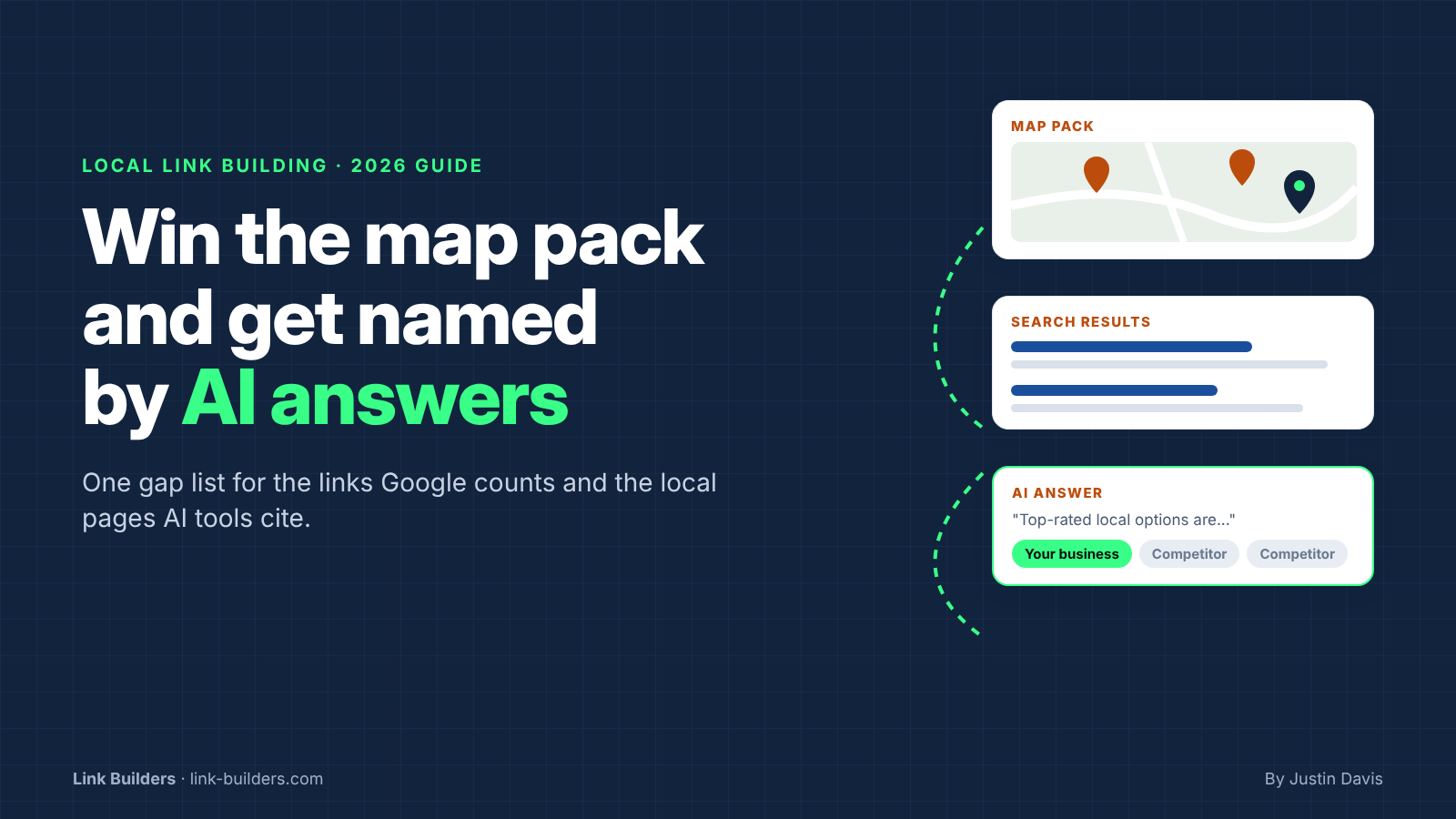
This question is new, and I wanted real data on it. So I analyzed 1,329 Google AI Overview citations across 208 searches about SEO and AI search. The short version: backlinks predict AI Overview citations, and links to the specific page matter more than the strength of the domain.
- The median cited page-one result had 123 referring domains. The median page-one result that wasn’t cited had 28.
- Page-one results with 1 to 9 referring domains were cited 26% of the time. Those with 200 to 999 were cited 45% of the time.
- Comparing pages for the same search, 10 times more referring domains meant about 30% better odds of being cited, at the same rank and domain rating.
- Once page-level links were known, domain rating added almost nothing.
There’s still no fixed number. Each step up helped, with smaller gains at the top, and the study shows a relationship, not proof that links caused the citations. But the practical takeaway is the same as for rankings: point links at the pages that answer your buyers’ questions, not just at your homepage.
Is Investing in Backlinks Worth It?
When the gap is real, usually yes. Unless a site earns enough links naturally, staying in competitive results for the long run takes quality links, not a raw count.
- Links still carry weight. They’re one of the clearest signals of which pages other sites trust, in classic search and in AI Overviews.
- The gap grows if you wait. The sites outranking you are often still building or earning links. Every month that passes can widen the gap and make catching up more expensive.
- Earned links compound. Relevant links keep working after the campaign ends, and they strengthen the whole domain, not just one page.
- They can cut ad spend. If you pay for Google Ads on keywords you could rank for, link building can be a long-term way to reduce reliance on pay-per-click. That’s a reason to invest, not a promise of a specific cost per acquisition.
The Better Question: How Much Outreach Does the Gap Need?
“How many backlinks do I need?” is the question everyone asks. The operational question is how much qualified outreach time it takes to close the gap against the pages already winning.
That’s why we don’t sell a promised link count. We sell white-hat hours with publisher fees at cost, and you approve every site and piece of content. See the link building process for how the work runs, or backlink pricing for current packages. Prefer to try it yourself first? Start with 15 proven tactics to get more backlinks.
Ready to size your gap? Contact Link Builders.
FAQ
How many backlinks do I need to rank on page one?
It depends on the keyword. Count the referring domains to the exact pages ranking in the top three to five, remove the junk, and compare with your page. That gap is a far better guide than any general number.
Do backlinks to my homepage help my other pages?
They help the domain overall, but pages compete one URL at a time. In my AI Overviews study, links to the specific page predicted citations better than domain rating did.
Is it better to have more links or better links?
Better. A handful of strong, relevant links from independent sites can change the shape of a profile. Thousands of cheap links can make it look like a link farm.
Do the example numbers in this article apply to my site?
No. Those three examples are hypothetical. I built them to show the method. Count referring domains on the exact pages ranking for your keyword, remove the junk, and compare them with your page. That is the only gap that matters for your plan.
What if the top results are big publishers I cannot realistically match?
Then the raw gap may be the wrong target. A huge publisher can sit in the results with a referring-domain count you will not catch up to, and still be there mostly because of brand, content, and the rest of the domain. In that case, pick a more specific keyword or a more specific URL, or compete on originality rather than on volume. The gap method still helps, because it shows you when a head-on fight is a poor use of hours.
Should I use Domain Rating, or count referring domains?
For this exercise, count clean referring domains to the exact ranking URLs. Domain-level scores are easy to quote and easy to misread. In my AI Overviews study, once page-level links were known, domain rating added almost nothing to the citation picture. A planning gap built only on a domain score will send you in the wrong direction.
How do I turn a link gap into a budget?
Translate the gap into outreach time, not into a promised link count. Some prospects never reply. Some replies come with a publisher fee. Some placements are not worth approving. That is why I sell hours and pass publisher fees through at cost, with site and content approval before anything goes live, instead of selling “X links for $Y.” See the link building process and backlink pricing for how that is scoped. Nobody can honestly guarantee how many links a block of hours will produce, or what those links will do to rankings.
About the author

Justin Davis is the founder of Link Builders, which offers link building services to companies and white label link building to agencies, and has been building links since 2015 for more than 150 clients in law, healthcare, real estate, software and other industries. After years of doing prospecting research by hand, he built an AI agent link building system that handles each step, from finding link opportunities and vetting sites to finding contacts and preparing outreach. He now works every project himself, running that system for agencies and in-house SEO teams, earning the links and mentions that help their clients show up in Google and in AI answers, and teaches it on YouTube. He also built AnswerBuilders, the AI visibility platform Link Builders uses to find the pages AI answers cite. Find Justin Davis on YouTube, LinkedIn and X.